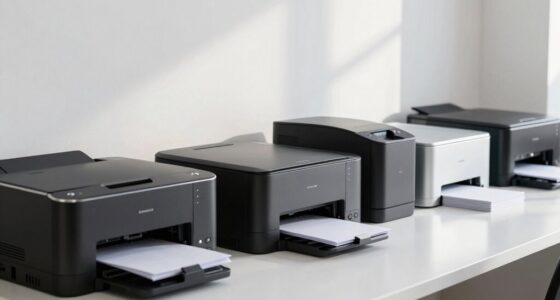
For a local backup solution for estate documents, I’d choose the WD 14TB My Book as the best overall fit for a large, centrally stored archive, while the WD My Passport drives suit portable copies and Synology’s BeeStation offers a more approachable home storage hub. The main tradeoffs are portability versus capacity, plug-and-play simplicity versus network features, and low setup effort versus greater control. A single drive can fail, so estate records deserve a second copy stored separately, even when the primary backup stays local. Read on for the full comparison and guidance on choosing a setup that fits your document volume and comfort with maintenance.

Get home office essentials delivered free with Prime
- Fast, free delivery on millions of items
- Prime Video, Amazon Music and more included
- Member-only deals all year
Key Takeaways
- The WD 14TB My Book stands apart for a large estate archive kept in one place, but its desktop form makes it less useful for off-site rotation than a portable drive.
- WD My Passport models provide several capacity choices in a portable format; the different capacities change how much else you can store, not the basic backup approach.
- Synology BeeStation combines local storage with personal-cloud-style access, while diskless Synology NAS models add flexibility at the cost of drive selection and setup work.
- The BeeDrive 2TB is the lineup’s portable SSD option, a better fit for quick, compact transfers than for buyers who need the most storage in a desktop enclosure.
- Small-capacity choices such as the 500GB Maxone and generic 500GB drive can suit a modest document archive, but leave less room for scans, photos, and future additions.
| WD 14TB My Book Desktop External Hard Drive, USB 3.0, Password Protection & Backup Software |  | Best Overall for Large Document Archives | Storage capacity: 14 TB | Interface: USB 3.1 | Connectivity: USB | VIEW ON AMAZON | See Our Full Breakdown |
| Western Digital 2TB Elements Portable External Hard Drive for Windows and Mac |  | Best Value for a Straightforward Second Copy | Storage capacity: 2 TB | Interface: USB 2.0/3.0 | Connectivity: USB | VIEW ON AMAZON | See Our Full Breakdown |
| Maxone 500GB Ultra Slim Portable External Hard Drive HDD USB 3.0 – Charcoal Grey |  | Best Compact Pick for a Small Document Set | Storage capacity: 500 GB | Interface: USB 2.0/3.0 | Connectivity: USB | VIEW ON AMAZON | See Our Full Breakdown |
| WD 5TB My Passport Portable External Hard Drive, Black |  | Best Portable Drive with Built-In Security | Storage capacity: 5 TB | Interface: USB 2.0/3.0 | Connectivity: USB 3.1/3.0 | VIEW ON AMAZON | See Our Full Breakdown |
| Synology 2-Bay DiskStation DS223j (Diskless) |  | Best for Shared Household Access | Model: DS223j | Drive bays: 2 | Configuration: Diskless | VIEW ON AMAZON | See Our Full Breakdown |
| WD 4TB My Passport Portable External Hard Drive – Black |  | Best Portable Encrypted Backup | Capacity: 4TB | Connectivity: USB 3.1 / USB 3.0 | Security: Password protection and hardware encryption | VIEW ON AMAZON | See Our Full Breakdown |
| Synology BeeStation 4TB Personal Cloud Storage Device (BST150-4T) |  | Best for Simple Household Sharing | Capacity: 4TB | Connection: Wired Ethernet | Compatible devices: Laptop, smartphone, tablet | VIEW ON AMAZON | See Our Full Breakdown |
| WD 1TB My Passport Portable External Hard Drive, Black |  | Best Compact Document Copy | Capacity: 1TB | Model number: WDBYVG0010BBK-WESN | Interface: USB 3.0 / USB 3.1 | VIEW ON AMAZON | See Our Full Breakdown |
| Synology DS124 Personal Backup & File Hub – Protect Photos, Secure Home Surveillance (1-Bay Diskless NAS) |  | Best Customizable Private Cloud | Model: DS124 | Drive bays: 1 | Drive included: No; diskless | VIEW ON AMAZON | See Our Full Breakdown |
| Synology BeeStation 4TB Personal Cloud Storage Device (BST151-4T) |  | Best for Automated Family Archives | Model: BST151-4T | Capacity: 4TB | Dimensions: 7.73 × 2.46 × 5.83 inches | VIEW ON AMAZON | See Our Full Breakdown |
| Synology BeeDrive 2TB Portable SSD |  | Best for Multi-Device Backups | Capacity: 2 TB | Interface: USB 3.2 Gen 2 | Connectivity: Wi-Fi, USB-A, USB-C, cellular | VIEW ON AMAZON | See Our Full Breakdown |
| WD 2TB My Passport Portable External Hard Drive, Black |  | Best for Encrypted Offline Copies | Storage capacity: 2 TB | Interface: USB 3.1/3.0 | Form factor: 2.5 in | VIEW ON AMAZON | See Our Full Breakdown |
| WD 6TB My Passport Portable External Hard Drive |  | Best High-Capacity Portable Archive | Capacity: 6 TB | Design: Slim and durable | Connectivity: USB 3.1/USB 3.0 | VIEW ON AMAZON | See Our Full Breakdown |
| Yxk Zero1 2-Bay Desktop NAS (Diskless) |  | Best for a Shared Home Archive | Drive bays: 2 | Storage included: None; diskless | Network connectivity: 2.5GbE | VIEW ON AMAZON | See Our Full Breakdown |
| 500GB External Hard Drive HDD, USB 3.0 Portable Expansion Storage |  | Best Compact Budget-Capacity Pick | Storage capacity: 500 GB | Connection: USB 3.0, USB-A, USB-C | Drive speed: 5400 RPM | VIEW ON AMAZON | See Our Full Breakdown |
| local backup solution for estate document | Warranty |
|---|---|
| WD 14TB My Book Desktop Extern | — |
| Western Digital 2TB Elements P | 2-year limited |
| Maxone 500GB Ultra Slim Portab | 3 years |
| WD 5TB My Passport Portable Ex | — |
| Synology 2-Bay DiskStation DS2 | 2 years |
| WD 4TB My Passport Portable Ex | 3 years |
| Synology BeeStation 4TB Person | — |
| WD 1TB My Passport Portable Ex | 3-year limited |
| Synology DS124 Personal Backup | 2 years |
| Synology BeeStation 4TB Person | 3 years |
| Synology BeeDrive 2TB Portable | — |
| WD 2TB My Passport Portable Ex | 3 years |
| WD 6TB My Passport Portable Ex | — |
| Yxk Zero1 2-Bay Desktop NAS | — |
| 500GB External Hard Drive HDD | — |
More Details on Our Top Picks
WD 14TB My Book Desktop External Hard Drive, USB 3.0, Password Protection & Backup Software
For an estate archive that includes scanned records, family photos, and other files, the 14TB capacity leaves far more room to grow than the portable WD 2TB Elements. Its desktop format is better suited to a fixed home backup station than a drive carried between locations, and the included backup software can help automate file copies. Hardware encryption and password protection add a layer of access control if the drive is lost or accessed by someone else, though they do not replace a separate backup or a plan for sharing credentials with an executor.
The tradeoff is its bulkier, powered desktop setup and the need to download and configure software. I would choose the WD My Passport 5TB instead for a compact drive that travels with a family member; this My Book makes more sense when capacity and a stationary archive matter more. A single external drive is still a single point of failure, so keep another copy elsewhere.
Pros:- 14TB capacity accommodates extensive scans and related family files.
- Hardware encryption and password protection provide access controls.
- Backup software is included for scheduled or recurring file copies.
- Listed read speed of up to 360 MB/s supports faster transfers than basic document-only needs require.
Cons:- Desktop form factor is less convenient to move or store in an off-site location.
- Backup software requires download and setup.
- A single drive does not provide redundancy if the drive fails.
Best for: Households digitizing years of estate paperwork and family records that want a high-capacity drive kept at a fixed home location.
Not ideal for: People who need a pocketable backup, want a ready-to-use setup without software configuration, or plan to rely on one drive as their only copy.
- Storage capacity:14 TB
- Interface:USB 3.1
- Connectivity:USB
- Form factor:3.5 inches
- Rotational speed:7200 rpm
- Listed read speed:360 MB/s
- Encryption:Hardware encryption
- Compatible platforms:Mac, PC
Our verdict“Choose the WD My Book if you want a high-capacity, stationary archive drive with encryption and backup software, and can maintain a second copy elsewhere.”
Western Digital 2TB Elements Portable External Hard Drive for Windows and Mac
The WD 2TB Elements is a practical choice for a focused estate-document backup: deeds, account records, insurance files, and scanned identification usually do not demand a desktop drive’s 14TB capacity. Its plug-and-play approach keeps the job simple, while compatibility with Windows and Mac makes it easier to use across household computers. Compared with the WD 5TB My Passport, it gives up capacity and the listed security and backup-software features, but it suits buyers who want a basic removable copy rather than a more feature-rich travel archive.
Its portable size makes it easier to store separately from a computer, an advantage for a backup copy kept in a secure location. The tradeoff is that there is no included backup software, so file-copy routines are up to the owner, and the 2TB ceiling leaves less room for photos and other expanding files than the larger WD options. I would not treat its portability as protection by itself: label it clearly and keep access instructions with estate records.
Pros:- 2TB capacity offers room for document scans and related files.
- Portable design can be stored apart from the main computer.
- Compatible with Windows and Mac.
- Plug-and-play setup avoids a dedicated backup application.
Cons:- No included backup software for automating recurring copies.
- No hardware encryption or password protection is listed.
- Less capacity than the WD My Book 14TB and WD My Passport 5TB.
Best for: Families who want a simple, removable second copy of scanned estate records and have modest storage needs.
Not ideal for: Buyers who need hardware encryption, included backup software, or room for a large archive of photos and video.
- Storage capacity:2 TB
- Interface:USB 2.0/3.0
- Connectivity:USB
- Color:Black
- Enclosure material:Aluminum/Glass
- Warranty:2-year limited
- Compatible platforms:Windows and Mac
Our verdict“Pick the WD Elements for a simple, portable second copy of a modest estate archive, but choose a more secure or higher-capacity model if those needs matter.”
Maxone 500GB Ultra Slim Portable External Hard Drive HDD USB 3.0 – Charcoal Grey
The Maxone’s main advantage for estate documents is its slim 2.5-inch body: it is easy to store with a household’s paperwork or keep in a separate, secure place. For a carefully selected folder of wills, powers of attorney, and key account records, 500GB may be enough. Its aluminum enclosure and plug-and-play operation also make it less involved than setting up the Synology DS223j, which needs separate drives and NAS configuration.
That simplicity comes with a narrower use case. The WD 2TB Elements offers four times the stated capacity, while the WD My Passport 5TB is a stronger fit for an archive that includes a substantial photo collection and offers listed encryption and backup software. The Maxone is specified as primarily Windows-compatible, so I would not choose it for a mixed-device household without checking compatibility first. It also has no external power supply listed, and its capacity leaves limited room for a growing archive.
Pros:- Compact 2.5-inch form factor is easy to store separately.
- Aluminum enclosure provides a durable outer shell.
- USB 3.0 connectivity supports file transfers without a separate application.
- Three-year warranty is listed.
Cons:- 500GB capacity is more limited than the WD Elements 2TB and WD My Passport 5TB.
- Compatibility is described primarily for Windows systems.
- No external power supply or encryption feature is listed.
Best for: A Windows-focused user who wants a very compact drive for a selected set of essential estate files rather than a full household archive.
Not ideal for: Families with large photo collections, Mac-dependent workflows, or a need for security features and automated backup software.
- Storage capacity:500 GB
- Interface:USB 2.0/3.0
- Connectivity:USB
- Form factor:2.5 inches
- Data transfer rate:5 Gbit/s
- Enclosure material:Aluminum
- Color:Charcoal Grey
- Warranty:3 years
Our verdict“Choose the Maxone only for a compact, Windows-oriented copy of a small set of essential documents, not as a growing family archive.”
WD 5TB My Passport Portable External Hard Drive, Black
The WD My Passport 5TB balances portable storage and access controls in a way the basic WD 2TB Elements does not: it lists password protection, hardware encryption, and backup software with ransomware defense. That combination is useful for estate files that may include sensitive financial or identity documents, provided the owner keeps recovery details available to the right person. Its 5TB capacity also leaves more room for scans and family records than the compact Maxone 500GB.
This is a stronger fit for a drive that may move between a home computer and a secure storage location than the desktop WD My Book 14TB. The tradeoff is that it has no listed USB-C or Thunderbolt connection, and the supplied data lists a transfer rate of 1 megabit per second, so I would not assume it is suitable for fast, large-scale backups. The stated rate is unusually low for this class; verify actual connection and performance details before relying on it for a large archive.
Pros:- 5TB capacity provides room for estate scans and related family files.
- Hardware encryption and password protection add access controls.
- Backup software with ransomware defense is included according to the product description.
- Compact 2.5-inch drive weighs 7.4 ounces.
Cons:- Listed transfer rate is only 1 megabit per second and should be verified before purchase.
- No USB-C or Thunderbolt connectivity is listed.
- Portable hard drive remains a single copy unless paired with another backup.
Best for: People who need a portable, higher-capacity document archive with listed hardware encryption and password protection.
Not ideal for: Buyers prioritizing fast transfers, USB-C connectivity, or a stationary high-capacity archive with room beyond 5TB.
- Storage capacity:5 TB
- Interface:USB 2.0/3.0
- Connectivity:USB 3.1/3.0
- Form factor:2.5 inches
- Hardware encryption:Yes
- Weight:7.4 ounces
- Dimensions:4.22 × 2.95 × 0.75 inches
- Listed data transfer rate:1 megabit per second
Our verdict“Choose the My Passport 5TB for portable capacity and listed security features, but verify its stated transfer rate and keep a separate backup copy.”
Synology 2-Bay DiskStation DS223j (Diskless)
The Synology DS223j differs from the external drives here because it is a two-bay NAS, designed to make files available across a household rather than connect to one computer at a time. Automated backup support for Macs, PCs, and mobile devices can help gather estate-related files from several family devices into one local system. That makes it a better match for shared access than the WD My Book 14TB, which offers a simpler, single-drive backup setup. Its private-cloud approach also keeps the storage under the owner’s control rather than making cloud storage the only copy.
The main tradeoff is setup and ownership overhead: this model is diskless, so drives must be purchased separately, and configuring a NAS takes more technical effort than plugging in the WD Elements. The two bays provide a platform for a more deliberate storage setup, but the product data does not specify included drives, capacity, or a particular redundancy configuration. I would choose it for a household willing to manage a shared system—not for someone who wants a grab-and-go backup drive.
Pros:- Two-bay NAS supports a shared local storage setup.
- Automated backup protection is listed for Macs, PCs, and mobile devices.
- Private-cloud features support multi-platform file access and syncing.
- Two-year warranty is listed.
Cons:- Diskless configuration requires separate hard-drive purchases.
- Setup may require technical knowledge and ongoing administration.
- Product data does not specify included storage capacity or a configured redundancy mode.
Best for: A technically comfortable household that needs local, shared access to estate files and automated backups from multiple device types.
Not ideal for: Someone who wants an inexpensive, plug-in single-computer backup or does not want to buy and configure hard drives separately.
- Model:DS223j
- Drive bays:2
- Configuration:Diskless
- Warranty:2 years
- Backup support:Automated backup for Macs, PCs, and mobile devices
- Storage approach:Private cloud
- Additional feature:Home security system support for IP cameras
Our verdict“Choose the DS223j for a managed, shared local archive across household devices, and skip it if you want a simple drive that works straight out of the box.”
WD 4TB My Passport Portable External Hard Drive – Black
For estate files that need to travel between home and a trusted relative, the WD 4TB My Passport offers a practical mix of capacity and portability. Its password protection and hardware encryption help shield documents if the drive is lost, while the included backup software adds a way to maintain copies without setting up a network device. Compared with the Synology BeeStation 4TB, this drive is easier to carry and does not depend on an Ethernet connection, but it lacks BeeStation’s automatic access and syncing across household devices. The tradeoff is the routine: I would connect it for scheduled backups and store it separately from the computer, rather than treat it as an always-current archive. Its 4TB ceiling and need for compatible USB ports also limit its fit for some setups.
Pros:- Portable, slim form makes separate or off-site storage easier
- Hardware encryption and password protection add a security layer for sensitive records
- Included backup software supports recurring file backups with ransomware defense
- 4TB capacity leaves room for scans and related household files
Cons:- Backups depend on connecting the drive and keeping the software configured
- USB compatibility can affect setup and performance
- A single drive does not provide redundancy if the drive fails
Best for: People who want an encrypted, portable copy of estate paperwork they can store separately or take to a family member
Not ideal for: Households seeking automatic backups across several devices or shared access without manually connecting a drive
- Capacity:4TB
- Connectivity:USB 3.1 / USB 3.0
- Security:Password protection and hardware encryption
- Backup software:Included, with ransomware defense
- Color:Black
- Warranty:3 years
Our verdict“Choose this if you want a portable, encrypted 4TB document copy; choose the BeeStation if automatic multi-device access matters more.”
Synology BeeStation 4TB Personal Cloud Storage Device (BST150-4T)
The Synology BeeStation 4TB makes sense when estate documents need to be reachable from several household devices without passing around a portable drive. Its guided setup, file syncing, and sharing features can reduce the manual steps involved in keeping copies current; automatic photo and video backup also gives it a broader household role than a document-only drive. Compared with the WD 4TB My Passport, the BeeStation favors network access over portability: it stays connected by Ethernet, while the WD can be carried and stored offline. That convenience brings a dependence on the home network and a fixed location, and the supplied 4TB capacity may be restrictive as family archives grow. For sensitive estate records, shared access also calls for careful account and permission choices.
Pros:- Guided setup is approachable for households new to personal cloud storage
- File syncing and sharing support access from multiple devices
- Automatic photo and video backups can keep related family records together
- No ongoing subscription fee is specified for its personal cloud functions
Cons:- Requires a wired Ethernet connection, limiting placement flexibility
- 4TB capacity may not suit large or long-running family archives
- Network-based access is less suited to an offline, separately stored copy
Best for: Families who want a guided, shared home storage hub for estate scans and device backups
Not ideal for: People who need an offline drive to carry between locations or who want wireless placement without an Ethernet connection
- Capacity:4TB
- Connection:Wired Ethernet
- Compatible devices:Laptop, smartphone, tablet
- Drive form factor:3.5 inches
- Enclosure material:Metal
- Color:Black
Our verdict“Pick the BeeStation for simple household sharing and syncing, but choose the WD My Passport for a portable copy you can keep offline.”
WD 1TB My Passport Portable External Hard Drive, Black
For a focused archive of wills, trusts, insurance papers, and scanned identification, the 1TB WD My Passport offers a smaller-capacity route to portable, protected storage. It includes hardware encryption and password protection, plus backup software with ransomware defense, so it can serve as a dedicated document copy rather than a general household media archive. Compared with the 4TB WD My Passport, this model is the more restrained choice for buyers who want to keep the backup limited to essential records; the smaller capacity also leaves less room for photos, video, and years of added files. It is a mechanical hard drive, so it will not match an SSD for speed, and the full backup features require software installation. I would choose it for a compact archive, not as the only copy.
Pros:- Compact 2.5-inch design is easy to store separately from a computer
- Hardware encryption and password protection suit sensitive documents
- Backup software includes ransomware defense
- Three-year limited warranty is specified
Cons:- 1TB capacity leaves less room for growing family archives than the 4TB My Passport
- Mechanical hard drive is slower than SSD storage
- Full backup features require software installation
Best for: Individuals or couples who want a portable, encrypted drive dedicated to essential estate and household records
Not ideal for: Families archiving large photo or video libraries, or anyone who wants SSD-level transfer speed
- Capacity:1TB
- Model number:WDBYVG0010BBK-WESN
- Interface:USB 3.0 / USB 3.1
- Form factor:2.5-inch
- Security:Hardware encryption and password protection
- Compatible devices:Desktop, laptop, tablet
- Warranty:3-year limited
Our verdict“Choose this for a compact, encrypted estate-document archive; step up to the 4TB My Passport if you plan to store broader family files.”
Synology DS124 Personal Backup & File Hub – Protect Photos, Secure Home Surveillance (1-Bay Diskless NAS)
The Synology DS124 is the most configurable choice here for a household that wants a private, network-accessible archive rather than a prefilled portable drive. It can centralize backups from phones and computers and provide private cloud access, which helps keep estate documents available across devices. Unlike the ready-to-use Synology BeeStation 4TB, the DS124 is diskless: I would need to buy and install a compatible drive before storing anything. That adds setup work but gives buyers more choice over the storage they put in the enclosure. The single bay is the major limit; it does not offer the expansion or drive redundancy a multi-bay NAS can provide. Home surveillance features add another use, but they do not replace a separate, offline backup of important legal records.
Pros:- Centralizes backups from phones, computers, and cameras
- Private cloud access is offered without monthly subscription fees
- Diskless design lets buyers choose the installed drive
- AI-powered surveillance can detect people and vehicles as an additional home use
Cons:- Requires a separate drive purchase and installation before use
- Single bay limits expansion and does not provide multi-drive redundancy
- More setup and maintenance are involved than with the preconfigured BeeStation
Best for: Technically comfortable households that want a customizable, networked archive and are prepared to select and install a drive
Not ideal for: Beginners seeking ready-to-use storage, or families who want built-in multi-drive redundancy and simpler setup
- Model:DS124
- Drive bays:1
- Drive included:No; diskless
- Dimensions:2.8 × 6.54 × 8.82 inches
- Weight:1247 g
- Enclosure material:Alloy steel
- Warranty:2 years
Our verdict“Choose the DS124 if you want control over a private home archive and can manage the drive setup; opt for BeeStation for a simpler ready-to-use hub.”
Synology BeeStation 4TB Personal Cloud Storage Device (BST151-4T)
This BeeStation version is the strongest fit in this group for households that want estate files alongside ongoing device and photo backups. Its guided setup, automatic backups, and Mac Time Machine support reduce the work of keeping multiple computers protected, while the included three-year Acronis True Image Essentials license adds a system-backup option. Local AI photo recognition can help organize a wider family archive, though it matters less if the drive will hold only legal scans. Compared with the BST150-4T BeeStation, this model adds the stated Mac backup and Acronis license; both are 4TB networked devices rather than portable offline drives like the WD 4TB My Passport. Its fixed capacity and limited expandability mean buyers with extensive media collections may outgrow it.
Pros:- Guided setup supports a simpler start than a diskless NAS
- Automatic backups for photos, videos, and files support ongoing household archiving
- Local AI photo recognition can help organize image-heavy family records
- Includes Mac Time Machine support and a three-year Acronis True Image Essentials license
Cons:- 4TB capacity may fill with extensive family media and system backups
- Less expandable than a traditional NAS such as the diskless DS124
- Networked tabletop storage is not a substitute for an offline copy stored elsewhere
Best for: Families who want a beginner-friendly home hub for estate documents, Mac backups, and automatically collected family media
Not ideal for: People who need an offline portable copy, a larger expandable archive, or storage devoted only to a small set of legal scans
- Model:BST151-4T
- Capacity:4TB
- Dimensions:7.73 × 2.46 × 5.83 inches
- Weight:1.8 pounds
- Enclosure material:Metal
- Mounting type:Tabletop
- Warranty:3 years
Our verdict“Choose this BeeStation for automated household and Mac backups in one 4TB hub; choose the DS124 if drive choice and NAS customization matter more.”
Synology BeeDrive 2TB Portable SSD
For estate records scattered across a computer, phone, and removable media, the Synology BeeDrive is the most flexible portable pick in this group. It can consolidate backups from PCs, Macs, and mobile devices, while its local AI Deep Search helps find files without sending their contents to a cloud service. That makes it a different proposition from the WD My Passport drives, which offer encryption and backup software but are conventional USB hard drives. The BeeDrive’s 1050 MB/s read speed and 43 g weight suit frequent transfers and off-site storage. Its limits are real: it depends on supported operating-system versions, and it is not a standalone family-wide archive like the Yxk Zero1 NAS. I’d choose it for portable, privacy-minded consolidation, not as the only copy of irreplaceable documents.
Pros:- Consolidates backups from computers, mobile devices, and SD cards
- Local AI Deep Search supports private file discovery
- Up to 1050 MB/s read speed over USB 3.2 Gen 2
- Lightweight 43 g portable design
Cons:- Compatibility depends on supported OS versions
- Does not support Windows 10 on ARM or Windows Server
- A single portable drive is not a complete backup strategy by itself
Best for: People who need to gather estate files from a supported PC, Mac, and mobile devices onto one portable, locally searchable drive.
Not ideal for: Households seeking a shared always-on archive or users with unsupported operating systems, including Windows 10 on ARM and Windows Server.
- Capacity:2 TB
- Interface:USB 3.2 Gen 2
- Connectivity:Wi-Fi, USB-A, USB-C, cellular
- Read speed:Up to 1050 MB/s
- Weight:43 g
- Dimensions:2.56 × 0.59 × 2.56 in
- Compatible operating systems:Windows 10/11, macOS 12+, iOS 15+, Android 10+
Our verdict“Choose the BeeDrive if you want a fast portable hub for estate files gathered from several supported devices, rather than a shared home NAS.”
WD 2TB My Passport Portable External Hard Drive, Black
The WD 2TB My Passport suits buyers who want a familiar USB drive with password protection and hardware encryption for an offline copy of wills, deeds, and scanned records. Its included backup software adds ransomware protection, although full features require a download and registration. Compared with the Synology BeeDrive, this is a simpler hard-drive approach: it lacks the BeeDrive’s multi-device consolidation and local AI search, but its security features are aimed directly at protecting stored files. The tradeoff is that a portable hard drive is less suited to frequent large transfers than the BeeDrive’s SSD, and the listed transfer-speed figures are unusually low, so I would not rely on them to predict real-world performance. It makes sense as a secured document copy, provided the software setup and its limitations fit your workflow.
Pros:- Password protection and hardware encryption
- Backup software includes ransomware protection
- Portable 2.5-inch form factor
- Three-year warranty
Cons:- Full software features require download and registration
- Hard-drive format is less suited to frequent fast transfers than the BeeDrive SSD
- Listed media-speed and transfer-rate figures provide limited guidance for practical performance
Best for: Individuals who want a 2TB USB hard drive with password protection and hardware encryption for a secured offline estate-document copy.
Not ideal for: People who frequently move large archives, want effortless setup without software registration, or need one device to gather files from phones and computers.
- Storage capacity:2 TB
- Interface:USB 3.1/3.0
- Form factor:2.5 in
- Security:Password protection and hardware encryption
- Software:Backup software with ransomware protection
- Warranty:3 years
- Compatible devices:Desktop, laptop, tablet
Our verdict“Pick this My Passport for a portable encrypted document copy if you are comfortable installing its software and do not need SSD-class transfer performance.”
WD 6TB My Passport Portable External Hard Drive
When an estate archive includes years of scans, photos, and supporting records, the 6TB capacity of this My Passport offers room to keep more than just the essential paperwork on one portable drive. It includes backup management with ransomware defense, password protection, and hardware encryption, giving it a stronger security story than the MICCOO 500GB drive. Compared with the WD 2TB My Passport, the main distinction is capacity rather than a different backup approach: both are portable hard drives, while the BeeDrive is the faster SSD-oriented option for frequent transfers. That extra space can reduce the need to split an archive across several drives, but the product data does not specify encryption-key handling or detailed transfer speeds. I’d treat it as a high-capacity offline copy, not the only location for important records.
Pros:- 6TB capacity for a broad document and media archive
- Password protection and hardware encryption
- Backup management includes ransomware defense
- Slim, durable portable design
Cons:- Encryption-key details are not specified in the product data
- USB 3.1/3.0 connection rather than a stated faster interface
- Large capacity may be unnecessary for a small estate-document collection
Best for: Families or executors maintaining a large portable archive of estate paperwork, scans, photographs, and related files.
Not ideal for: Buyers with a small document-only archive, those who prioritize fast frequent transfers, or anyone who needs clearly documented encryption-key management.
- Capacity:6 TB
- Design:Slim and durable
- Connectivity:USB 3.1/USB 3.0
- Security:Password protection and hardware encryption
- Software:Backup management with ransomware defense
- Storage type:Portable external hard drive
Our verdict“Choose the 6TB My Passport if you need one portable hard drive for a large archive and can accept limited detail about encryption-key handling.”
Yxk Zero1 2-Bay Desktop NAS (Diskless)
The Yxk Zero1 is the group’s clearest choice for a household that wants estate documents stored in one shared, network-accessible location rather than carried on a single USB drive. Its two bays, RAID modes, and snapshot recovery give it an archive-oriented role that differs from the WD My Passport drives: those are simpler offline copies, while this NAS can serve files across Windows, Mac, iOS, and Android devices. 2.5GbE supports faster local transfers on a compatible network, and Docker support adds room for advanced home setups. The costs in effort are meaningful: drives are not included, the two-bay design limits expansion, and a NAS still needs a separate backup to guard against device failure or household incidents. Compared with the BeeDrive, it favors shared access over pocketable portability.
Pros:- Shared access across Windows, macOS, iOS, and Android
- 2.5GbE connectivity for fast transfers on a compatible network
- RAID modes and snapshot recovery features
- No recurring cloud-storage subscription is required
Cons:- Diskless setup requires separate hard-drive purchases
- Two bays limit future storage expansion
- A NAS alone does not provide an off-site copy of important records
Best for: Households or executors who want a shared, always-available local archive across several devices and are willing to buy and configure drives.
Not ideal for: People seeking a ready-to-use portable backup, those unwilling to select drives, or users who need more than two bays for expansion.
- Drive bays:2
- Storage included:None; diskless
- Network connectivity:2.5GbE
- Storage features:RAID modes and snapshot recovery
- Advanced software support:Docker support
- Compatible operating systems:Windows, macOS, iOS, Android
- Weight:2 kg
Our verdict“Choose the Zero1 if your household needs shared local access to estate records and you are prepared to supply drives and maintain a second backup.”
500GB External Hard Drive HDD, USB 3.0 Portable Expansion Storage
The MICCOO 500GB external drive is a straightforward fit for a small estate-document set: deeds, identity records, and scanned paperwork do not always need several terabytes of storage. Its USB-A and USB-C connections and broad stated device compatibility make it more adaptable than the WD My Passport 2TB, but it offers less storage and its listed features do not include password protection or hardware encryption. That matters when the drive contains sensitive personal records. The MICCOO is also NTFS-formatted, so Mac users may need to reformat it for full write access; the product data notes that transfer speeds vary by device and connection. Unlike the BeeDrive, it does not list cross-device backup software or local search. I’d choose it for a basic, compact copy, with protection handled separately.
Pros:- Compact, slim design for portable storage
- USB-A and USB-C connectivity
- Broad stated compatibility including Windows, Mac, ChromeOS, and Linux
- USB-powered operation with cables and adapters included
Cons:- 500GB capacity is limited compared with the 2TB and 6TB WD My Passport options
- No password protection or hardware encryption is listed
- NTFS formatting may require reformatting for full Mac write access
Best for: Someone creating a modest offline copy of scanned estate documents who values a small USB-powered drive and broad device connections.
Not ideal for: People storing sensitive records without another security measure, Mac users who need immediate full write access, or anyone with a large archive.
- Storage capacity:500 GB
- Connection:USB 3.0, USB-A, USB-C
- Drive speed:5400 RPM
- Form factor:Portable, slim aluminum
- Dimensions:4.65 × 2.99 × 0.51 in
- Weight:0.36 lb
- Power:USB-powered
- Pre-format:NTFS
Our verdict“Pick the MICCOO for a small, basic portable document copy if you do not need built-in encryption and can manage its formatting limits.”

How We Picked
I ranked these products for the specific job of keeping wills, trusts, insurance records, deeds, tax files, and related scans accessible on local storage. I weighed usable capacity, connection and portability, the likely effort needed to set up and maintain backups, and whether the product provides a straightforward external-drive workflow or a more flexible network-storage role. I also considered how well each option fits a realistic estate-document routine: making copies on a schedule, keeping files organized, and avoiding dependence on a single device.
The ranking favors products with a clear fit and lower operational burden for a home archive, not simply the largest capacity or most features. The My Book leads for a sizable stationary archive; portable WD drives rank well for simpler rotation and transport; BeeStation offers a middle ground for people who want a storage hub without selecting NAS drives. Diskless NAS models rank lower for many households because owners must choose drives and manage more setup, while the smaller and less clearly specified portable drives are best treated as modest-capacity or secondary options. No drive alone is a complete backup plan, and listed products are judged by their stated product type and features rather than assumed encryption, redundancy, or recovery guarantees.
Factors to Consider When Choosing Local Backup Solution For Estate Documents
Choosing storage is only one part of protecting estate records. I’d first decide how the files will be copied, who needs access, and what happens if the drive is lost or stops working. These factors help separate a simple external drive purchase from a dependable household record-keeping routine.
Match Capacity to the Whole Archive
Estate files may begin as a small set of PDFs, but scans of deeds, photographs, correspondence, and financial records can expand the archive. Estimate the size of your current files, then leave room for additions and multiple dated copies rather than filling a drive immediately. A larger drive does not automatically create a safer backup; it can simply put more files on one device that could fail. Buyers with a modest document-only collection may prefer a smaller portable model, while households storing years of scans and media may benefit from desktop capacity. Keep a separate copy of essential files so that spare space is not mistaken for redundancy.
Choose a Backup Routine Before Choosing a Drive
A backup is useful only if it is current, so pick a schedule that someone in the household can maintain. Consider whether you will copy files manually, use included backup software, or rely on a storage hub’s workflow, then check that the process supports the computers and operating systems you use. Common mistakes include making one initial copy and never updating it, or keeping the only backup connected to the same computer all the time. For frequently changing records, regular incremental copies can reduce the work of updating the archive. Write down the routine and assign responsibility, especially when more than one person manages household documents.
Separate Local Access from Off-Site Protection
Local storage gives you access without relying on an online storage provider, but it does not protect against theft, fire, flooding, or other damage at home. A portable drive is easier to rotate to a separate secure location than a desktop unit, while a large stationary drive may be more convenient for the primary archive. Avoid storing every copy beside the computer or in the same room. A sensible plan keeps one copy available for routine use and another physically separate, with access limited to trusted people. If online access is part of your plan, treat it as a separate layer rather than assuming a personal-cloud feature replaces an independent backup.
Treat Privacy and Recovery as Separate Questions
Password protection, drive encryption, and account access are not interchangeable. Before storing sensitive documents, confirm which security features the exact model and software provide, how recovery works if a password is forgotten, and whether the feature covers the whole drive or only selected files. Avoid relying on a product name or bundled software description as proof that every stored file is encrypted. Keep recovery information somewhere secure but accessible to the person authorized to manage the estate. A strong privacy setup that nobody can recover can be as damaging as an exposed archive, so plan for both confidentiality and access.
Decide Whether NAS Flexibility Is Worth the Work
A network-attached storage device can make files available to multiple household users and may support broader storage workflows, but it introduces more configuration and upkeep than a USB drive. Diskless models require separate drive purchases and decisions about how storage is arranged; buyers must also manage network settings, accounts, and updates. A single-bay device and a two-bay device do not offer the same storage layout, and redundancy settings are not a substitute for another independent copy. If only one person needs occasional access to a folder of PDFs, a portable or desktop drive may be easier to keep current. Choose NAS when shared access and control solve a real household need, not simply because it has more features.
Plan for Handover, Labels, and File Readability
Estate records may need to be found by someone other than the person who created the archive. Use clear folder names, consistent dates, and a short index that explains where key records are stored; avoid leaving the archive dependent on one person’s memory. Keep passwords and recovery instructions in a controlled, documented place, separate from the drive itself. Use common file formats where practical so an executor or family member can open records without specialized software. Review the archive periodically for damaged files, outdated copies, and changes in the people authorized to access it. These habits can matter more to a future handover than buying a drive with extra capacity.
Frequently Asked Questions
Is one external hard drive enough for estate documents?
One drive can hold a useful local copy, but it leaves the archive exposed to device failure, loss, or damage at home. I’d keep at least two copies on separate devices or storage locations, with one copy physically apart from the primary drive. The copies should be updated on a schedule, and the household should know which one is current. A larger drive does not remove the single-device risk. For sensitive records, also plan how authorized family members can access the files if the primary organizer is unavailable.
Should I choose a portable drive or a desktop drive for these records?
Choose a portable drive if you value easy storage, transport, or rotation to another secure location. A desktop drive such as the My Book is a better match when you want substantial capacity in a stationary archive and do not need to carry it around. Neither form factor makes a backup safe by itself; placement and routine matter just as much. Portable drives can be misplaced, while desktop drives may remain beside the computer and share its risks. Your choice should follow where the second copy will live and who will update it.
Does a Synology NAS replace a separate backup drive?
No; a NAS can centralize files and support household access, but it remains a device that can fail or be affected by events at its location. A two-bay design may offer storage arrangements beyond a single external drive, depending on the drives and configuration, but that is not the same as an independent backup. Diskless models also require you to select and install drives and manage setup. I’d treat a NAS as the primary shared archive only if its management features are useful to your household, then maintain another copy on separate storage. Confirm the exact model’s capabilities before relying on a particular redundancy or security feature.
How should I protect the archive if the person who manages it becomes unavailable?
Create a clear index of the archive, note which device contains the current copy, and document the steps an authorized person needs to open it. Store passwords or recovery details securely, but not only on the drive they protect. Make sure the designated person knows where those instructions are and can identify the relevant files without guessing. Test access with that person before an emergency, using a copy rather than altering the sole archive. Review the plan when family roles, devices, or account details change.
When is it worth choosing a NAS or personal storage hub instead of a USB drive?
A storage hub or NAS makes more sense when several trusted household members need access or when you want files organized in a shared location. BeeStation offers a more approachable hub-style option than a diskless NAS, while models such as the DS223j give buyers more control but require drive choices and additional setup. If you only need to archive documents from one computer, a USB drive is often simpler to maintain. Before buying a network device, decide who will handle account management, updates, and recovery. Keep a separate copy regardless of which shared-storage option you choose.
Conclusion
For most households with a sizable archive kept in one place, I’d choose the WD 14TB My Book as best overall; it pairs a large stated capacity with a straightforward desktop-drive role. The best value for a simple portable workflow is a WD My Passport model sized to the archive, while the best premium-style hub is the Synology BeeStation for buyers who want shared storage features without assembling a diskless NAS. For beginners who want a familiar USB-drive approach, I’d start with a suitable-capacity WD Elements or My Passport and set a recurring copy schedule. For households needing more control or shared network storage, consider the Synology DS223j or DS124 only if someone is prepared to configure and maintain it. Whichever you choose, keep a second copy apart from the main device and document how an authorized person can retrieve the records.