
TL;DR
A precious metals investment kit is a seller-assembled package of bullion coins or bars, but the term does not describe a regulated product or promise a bargain. Check each item’s metal, weight, purity, and premium, then compare the full price—including delivery and storage costs—with equivalent products. Physical metals can fluctuate in value, may be costly to sell or store, and do not guarantee a profit.
A beginner opens a bullion kit and finds several bright coins tucked into plastic capsules. The packaging looks polished; the real question is whether the metal inside is worth what they paid. That answer takes more than a glance at the seller’s discount banner.

Get home office essentials delivered free with Prime
- Fast, free delivery on millions of items
- Prime Video, Amazon Music and more included
- Member-only deals all year
A precious metals investment kit is a collection of bullion products sold together, often as a starter package. You’ll learn how to inspect what they are, compare their price with the metal value, and check the practical details that shape ownership—from resale and storage to taxes. The kit is a purchasing format, not a promise of diversification, safety, or profit.
These details matter because bullion has costs and risks even when you hold it in your hand. Gold, silver, platinum, and palladium prices can rise or fall; metals generally pay no interest or dividends. This guide gives you a grounded way to assess a kit without treating it as financial advice.
Treat a kit as a package of bullion products, not as a regulated investment strategy or a guarantee of diversification.
Verify every item’s metal, weight, purity, product type, and seller terms before comparing prices.
Compare the full purchase cost—including premiums and fees—with equivalent products from other sellers.
Ask about buyback terms and likely resale prices; a sale may return less than you paid.
Plan for storage, insurance, and local tax or account rules before purchasing.
What a Precious Metals Investment Kit Actually Contains
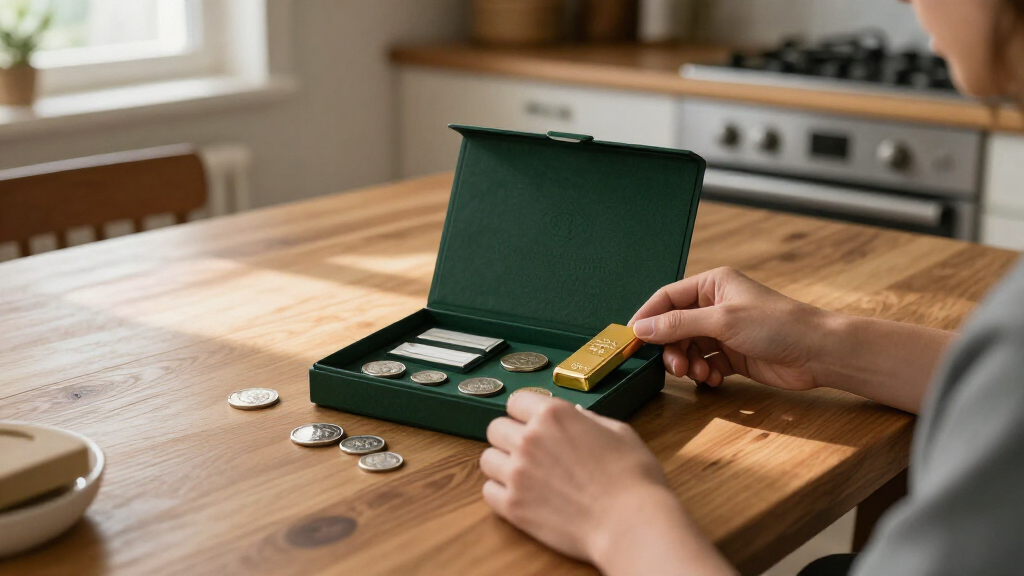
A precious metals investment kit is a seller-assembled package of bullion coins or bars, sometimes covering one metal and sometimes several. The seller may set a budget, quantity, or theme, but the label is not a regulated product category. For example, one kit might contain three silver coins, while another combines small gold and silver pieces.
That variety makes the itemized list more useful than the box design. Check the metal, weight, and purity of every piece, along with its denomination, mint or refiner, and condition. If a listing says “assorted,” ask whether the seller guarantees specific products or only a total metal weight and purity. A sealed case can feel reassuring, but it does not tell you whether the products match your needs.
Also separate bullion from collectible coins. Bullion is generally valued mainly for its metal content, while collectible or numismatic coins may carry a premium tied to rarity, condition, or demand among collectors. That extra price can be harder to judge and may not be recovered at resale. Imagine comparing a plain one-ounce bullion coin with a limited-edition coin in a glossy display box: they contain metal, but the seller may be charging for very different things.
A kit can make a first purchase feel simpler, much like a pre-packed set of tools. Yet convenience does not make the package automatically diversified or suitable. Compare each piece on its own before deciding what the bundle offers.
Products Worth Considering

Apple MacBook Pro 14.2-Inch Laptop with M6 Chip, Space Black

Canon SELPHY CP1500 Wireless Dye-Sublimation Photo Printer Bundle with 108 Sheets of Paper and 3 Ink Cartridges

Dell UltraSharp U2424H 24-Inch FHD Monitor
As an affiliate, we earn on qualifying purchases.
How to Compare a Kit’s Price with Its Metal Value
To judge a kit’s price, compare what you would pay with the current metal value of its contents, then account for premiums and fees. The spot price is a market reference for a metal; retail bullion often sells above it. That gap can reflect fabrication, product size, demand, availability, and the dealer’s markup.
Start with the itemized weights and purities, then look up current metal reference prices close to the time you compare offers. Retail prices and premiums can change, so this article does not state live prices. Smaller pieces often have a higher premium per unit of metal than larger ones. A one-ounce coin and ten small pieces might contain similar total metal, but their manufacturing and selling costs can differ.
For a simple comparison, suppose a kit lists ten one-ounce silver rounds. Find prices for equivalent rounds from reputable sellers and add shipping, payment surcharges, and any other stated costs. If the kit costs less than the seller’s usual price, that alone does not prove it is competitive: compare it with current offers for equivalent products. A “limited-time” discount can make a price tag feel urgent without changing the math.
- List each product, its metal, weight, purity, and type.
- Estimate the metal value using a current reference price and the stated amount of each metal.
- Compare equivalent products at other reputable sellers, including delivery and payment charges.
- Check the likely selling price and any return or cancellation terms before placing an order.
This process does not tell you whether bullion belongs in your finances. It helps you see what the package costs and which charges could affect the result.
Which Kit Details Can Change Your Resale Experience
Resale depends on the product, the buyer, and the market when you sell—not just the price you paid. Common bullion coins and bars from recognized mints and refiners may be easier for dealers to identify, but that does not set a guaranteed buyback price. A dealer may offer less than the retail price, and the difference can include spreads, testing, or transaction costs.
Before buying, ask the seller how its buyback process works. Does it buy the same products it sells? How does it set its offer, and do you need to ship items for inspection? Compare the likely selling price with your purchase price, rather than treating “easy to sell” as the same thing as “easy to sell without a loss.” For instance, someone who buys a small silver bar for convenience may later find that the local dealer’s offer is lower than the original receipt.
Coins and bars can suit different circumstances. Familiar coins may be easier for some buyers to recognize, while larger bars can have lower premiums per unit of metal at some sellers. The tradeoff is that a large piece may be less convenient if you want to sell only part of your holding. Neither format is always better; product size, dealer terms, and local demand matter.
Pay attention to claims about collectibility as well. If a package includes special packaging or a limited mintage, ask what supports the premium and whether a typical bullion dealer would pay it. A framed certificate may add a story to the sale, but the resale buyer still decides what that story is worth.
How to Check the Seller, Authenticity, and Storage Costs
A sound purchase starts with a seller whose identity, product details, delivery terms, and return policy you can verify. Read the written specifications before ordering: reputable listings should state the product, metal, weight, and purity clearly. Look for pressure tactics, guaranteed-return claims, or pitches that describe a kit as a rare opportunity. Those claims deserve extra scrutiny because bullion prices move and no kit guarantees a profit.
Documentation such as an assay card or certificate can give useful product information, but it cannot replace a trustworthy source. If you already own an item and have doubts, ask a qualified dealer or independent tester about appropriate verification. A seller’s packaging may look crisp and professional, much like a clean label on a jar; appearances alone do not establish what is inside.
Ownership also means planning for secure storage. Home storage can offer direct access, but you need to think about theft, fire, and what your insurance covers. Third-party vaulting may offer professional custody, but it can bring fees, access rules, and questions about insurance and account terms. Neither approach is free of cost or risk.
Picture a buyer who orders online and only checks the metal price. The final cost could also include shipping, a payment surcharge, storage, insurance, and a later buyback spread. Review each cost before checkout, and keep the receipt and product documentation with your records. If the seller does not explain delivery or return terms clearly, that uncertainty is part of the buying decision.
Why a Kit Does Not Guarantee Diversification or Protection
A kit can contain several products without giving you meaningful diversification, and physical bullion does not reliably protect you from losses. A bundle with gold and silver still concentrates the purchase in precious metals. Prices can shift with investor demand, interest rates, currency movements, inflation concerns, and geopolitical events, and those forces do not push every metal in the same direction.
Metals can play a diversification role in some financial plans, but they generally do not produce income such as interest or dividends. Their value can fall, and a future sale may bring less than you paid after premiums and fees. A kit marketed as an inflation hedge is not a guarantee: gold or silver may not rise during every inflationary period or crisis.
Think of bullion like carrying a sturdy umbrella. It can be useful in certain weather, but it does not control the forecast or keep every part of you dry. For example, a household may buy a modest quantity of silver coins because it wants direct ownership, then find that the price dips while other financial needs call for cash. That is one reason a preset kit size should not determine how much anyone can afford to risk.
There is no universally best metal for a beginner. Gold, silver, platinum, and palladium differ in price, volatility, market size, and product premiums. If you are comparing a kit with an exchange-traded fund or mining shares, remember they represent different kinds of ownership and carry different risks. The right comparison depends on your goals and finances; this article is not a recommendation to buy or sell any asset.
What to Check on Taxes and Retirement Account Claims
Tax rules for buying, holding, or selling bullion depend on your location, the product, and the transaction. A precious metals investment kit does not have one universal tax treatment just because a seller calls it an investment package. Check current guidance from the relevant authority or a qualified tax professional before acting.
Questions may include sales tax or value-added tax when you buy, capital gains rules if you sell at a profit, and reporting obligations for a particular transaction. For example, a buyer comparing two similar kits in different jurisdictions may face different checkout taxes, even if the listed metal content and price look alike. Rules can change, so an old forum answer may not fit your situation.
Some sellers also promote bullion through retirement accounts. Eligibility depends on the account rules, the metal and product specifications, the custodian, and local law. A coin that can be bought personally may not meet an account’s requirements, and custodial or storage fees can affect the total cost. Ask the custodian directly for written requirements before purchasing for an account.
Keep these checks separate from the seller’s sales pitch. A claim that a kit is “retirement eligible” does not resolve the details of your account or tax position. Confirm the rules with an official source or qualified professional who can consider your circumstances.
Frequently Asked Questions
What is included in a precious metals investment kit?
It depends on the seller. A kit may contain gold, silver, platinum, or palladium coins or bars in set quantities, but you should check the itemized list for metal, weight, purity, and product type.
Is a kit cheaper than buying the items separately?
Not necessarily. Compare the kit with equivalent products at other sellers, including shipping, payment surcharges, and other stated fees. A discount from a seller’s usual price does not by itself show that the total is competitive.
Are coins better than bars?
Neither format is always better. Familiar coins may be straightforward for some dealers to identify, while bars can carry lower premiums at some sizes. Product, dealer, resale terms, and your own circumstances all matter.
Can I sell the metals whenever I want?
You can usually seek a buyer, but the selling process and price depend on the market, product verification, and dealer terms. The offer may be below your purchase price after premiums and other costs.
Are precious metals a safe investment or an inflation hedge?
Precious metals can play a diversification role for some people, but their prices fluctuate and they do not reliably rise during every inflationary period or crisis. They generally pay no interest or dividends, and no kit guarantees a profit or preserves purchasing power.
How can I check whether bullion is genuine?
Buy from a seller whose identity and terms you can verify, and check the product specifications and documentation. Assay cards or certificates can help, but they do not replace a trustworthy source; ask a qualified dealer or independent tester if you have doubts.
Should I store bullion at home or in a vault?
Compare security, access, insurance coverage, custody terms, and fees. Home storage and third-party vaulting each involve tradeoffs, so check what your insurance covers and what rules apply before choosing.
Conclusion
Remember this: the box does not tell you what a bullion kit is worth. The itemized metal, the full purchase cost, and the likely resale and ownership costs do. Take time to check those details, and treat every claim about safety or profit with care.
Physical metals can be volatile and can lose value; no kit guarantees a return. Before spending, know what you are buying and where you will keep it. A clear receipt and a quiet, careful comparison beat a countdown timer every time.