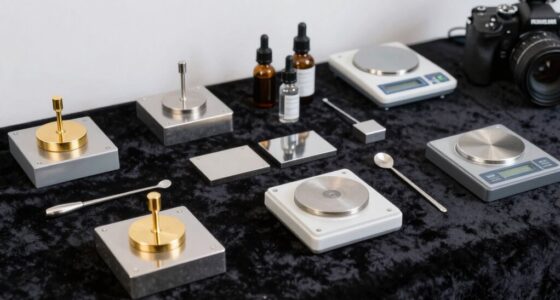
This checklist is for people organizing a Gold IRA protection setup and the related coins, records, and storage supplies. Use it to think through practical handling and organization needs alongside your account provider’s requirements.

Get home office essentials delivered free with Prime
- Fast, free delivery on millions of items
- Prime Video, Amazon Music and more included
- Member-only deals all year
The sections cover a bullion coin capsule, a scale, a testing kit, a safe, a display case, and inventory labels. Each slot focuses on a specific role in keeping items organized, handled, or documented; the product names alone do not establish suitability for any particular IRA or storage arrangement.
Start by checking what you already own, then compare each pick with your coin dimensions, storage location, and intended use. Confirm fit, compatibility, and any applicable account or custodian requirements before relying on a product for precious metals.
Bullion Coin Capsule
A capsule can help keep individual coins organized and easier to handle, while lockable storage and adjustable dividers may suit a collection with varying storage needs. Before choosing this coin case, check whether its compartments match the coins you plan to store. The product name does not specify capsule dimensions, compartment sizes, or materials, so confirm those details with the seller.
A common mistake is assuming that a case labeled for collectors will fit every bullion coin or provide the level of security a particular location requires. Measure the coins or their existing capsules, and compare those measurements with the interior layout. Check how the dividers adjust, whether the lid closes with items in place, and what the lock is designed to secure. If the case will sit inside a larger safe or storage box, verify its outer dimensions and clearance too. Consider how often you need access and whether the case will be moved; a tightly packed layout may be awkward to use. Confirm that the product’s features align with your intended storage arrangement rather than inferring protection from the word “lockable.”
What to look for:
- Compartment dimensions that fit the coins or capsules you intend to store
- Adjustable dividers that can be positioned for your collection
- Lock and closure details suited to the storage setting
- Outer dimensions that fit the planned shelf, drawer, or safe
- Clear product information about materials and intended use
Coin Case for Collectors with Lockable Storage and Adjustable Dividers

This lockable coin storage box features adjustable dividers and a reinforced aluminum frame, capable of holding up to 180 graded slabs or approximately 350–400 encapsulated coins. Its water-resistant exterior and cushioned interior provide protection for coin collections, making it ideal for home storage, coin shows, and gifting.
Pros:
- Secure lockable design with two keys for added security
- Adjustable dividers allow customizable organization
- Durable reinforced aluminum frame and water-resistant exterior provide excellent protection
- Large capacity suitable for graded slabs and loose coins
Cons:
- Not waterproof under all conditions
- Capacity varies depending on coin size and layout
- No included coins, holders, or capsules
Best for: Collectors who want adjustable compartments and lockable storage.
Not ideal for: Anyone who needs verified dimensions or security details the listing does not provide.
Bottom line: Confirm the compartment and case dimensions before choosing this adjustable storage option.
Bullion Scale
A scale can support an inventory routine by giving you a way to weigh items, but this pick is described as a hanging luggage scale. Its intended product type matters: the name does not establish the precision, units, or suitability needed for weighing bullion. Review those specifications before deciding whether it fits your process.
A frequent buying mistake is treating any digital scale as interchangeable with a purpose-selected weighing instrument. Check the stated capacity, resolution, units, calibration guidance, and how the hook attaches to the item or its container. Consider whether the scale can be read steadily at the weights you expect and whether the handle and hook suit repeated use. For coins, compare the device’s smallest readable increment with the level of detail you need; do not assume the word “digital” implies a particular precision. If you intend to compare a reading against documented specifications, use a consistent method and account for any container or packaging. Confirm accuracy and repeatability from the listing or manufacturer information, and follow your custodian’s procedures where weighing is part of an approved workflow.
What to look for:
- Capacity and resolution stated clearly by the manufacturer
- Units available that match your recordkeeping method
- Calibration or accuracy guidance for the intended use
- Hook and handle design compatible with the items or container
- Instructions for consistent, repeatable readings
Digital Hanging Luggage Scale with Comfortable Handle and Large Hook, 110lb/50kg

This digital hanging luggage scale offers high‑precision aluminum sensor accuracy up to 110 lb (50 kg) with 0.1 lb/50 g graduations. It features a large backlit LCD display, rubber‑coated handle and sturdy stainless steel hook for comfortable use on bags, fish, backpacks and more.
Pros:
- High‑precision aluminum sensor provides extremely accurate readings.
- Large 110 lb capacity and versatile for luggage, fish, backpacks, and more.
- Backlit LCD display and comfortable rubber‑coated handle make reading easy in low light.
Cons:
- Requires three AAA alkaline batteries; no rechargeable option.
- Auto‑off after one minute may interrupt continuous weighing.
Best for: Users who need a hanging scale for an appropriate weighing task.
Not ideal for: Anyone who needs confirmed bullion weighing precision from the product name alone.
Bottom line: Verify the scale’s accuracy, resolution, and intended use before relying on its readings.
Gold Testing Kit
A testing kit may be considered when a person wants a tool for assessing jewelry or other metal items, but the listed product is named as a jewelry testing and appraisal kit. That description does not confirm that it can authenticate bullion coins or bars. Treat intended use as the first compatibility check, not an assumption.
Before purchasing, review the maker’s instructions, the metals and item types covered, and any sample preparation or safety steps. The product name mentions solutions, so check how they must be handled, stored, and disposed of, and whether the process could mark or damage an item. A common mistake is relying on a single test or an appraisal label as conclusive verification. If you are evaluating IRA-related bullion, check with your custodian or a qualified professional about accepted verification methods. Confirm whether the kit requires consumables, whether the instructions explain result limitations, and whether the method works with the specific coin or bar format you intend to assess. Do not infer assay capability or accuracy from the broad phrase “all-in-one.”
What to look for:
- Explicit compatibility with the metals and item types you need to assess
- Instructions that explain test steps and result limitations
- Details about solution handling, storage, and disposal
- Information about potential marking or damage to items
- Guidance on consumables, maintenance, and repeat use
Gemtone All-in-One Jewelry Testing and Appraisal Kit with Solutions, Digital Sca

This comprehensive jewelry testing kit includes solutions, a digital scale, diamond tester, touchstone, magnifier, files, and reference bars for evaluating gold, silver, platinum, and diamonds. It features a precise digital scale with multiple weighing modes and larger test solution bottles for extended use.
Pros:
- Comprehensive set with multiple testing tools and solutions
- High-precision digital scale with versatile weighing modes
- Includes reference bars for practice and calibration
- Large test solution bottles for extended testing
Cons:
- Requires some familiarity with jewelry testing techniques
- Electronic diamond tester may need calibration over time
Best for: People seeking a jewelry testing kit for items covered by its instructions.
Not ideal for: Anyone needing established bullion authentication without verified compatibility.
Bottom line: Check the documented test scope and handling requirements before using this kit on precious metals.
Safe Deposit Box
A safe can provide a designated place for items at home, but the product name describes a home safe and does not establish that it meets a particular storage, insurance, or IRA custody requirement. Decide first whether home storage is appropriate for your situation, then assess the safe’s stated features against that use.
Common mistakes include assuming that “fireproof and waterproof” means unlimited protection or that a home safe automatically satisfies a custodian’s rules. Review the manufacturer’s ratings, the conditions and duration they cover, installation instructions, and any limits on contents or placement. Measure the exterior and interior, including usable shelf space, to ensure the safe fits both the location and the items you plan to organize. Consider access, anchoring instructions, the lock type, and how you will manage keys or codes. Ask your custodian and insurer about their requirements before storing IRA assets at home. A safe may be useful for personal belongings, but suitability for an account depends on the governing arrangements and cannot be determined from the product name alone.
What to look for:
- Manufacturer documentation for fire and water claims
- Interior dimensions and usable storage layout
- Lock, access, and anchoring instructions
- Placement requirements and installation guidance
- Custodian and insurer acceptance for the intended use
SentrySafe SFW205GQC Fireproof and Waterproof Steel Home Safe with Digital Keypa

This gray steel home safe provides UL Classified fire protection for one hour at 1700°F and ETL Verified waterproof protection for 24 hours in up to 8 inches of water. It features a digital keypad lock with a secondary key override, interior lighting, and a 2.05 cubic foot capacity designed to secure documents, digital media, and valuables.
Pros:
- Certified protection against fire (1 hour at 1700°F) and water (24 hours at 8 inches)
- Secure digital keypad with a secondary key override for dual-layer security
- Includes interior lighting, file organizer, and drawer for easy organization
- Robust construction with 6 live-locking bolts and a pry-resistant hinge bar
Cons:
- Requires 17.5 inches of clearance for the door to fully open
- Dependent on battery power for the digital lock functionality
- Limited one-year warranty may be short for high-value security equipment
Best for: People comparing a home safe for appropriate personal storage.
Not ideal for: Anyone assuming a home safe automatically qualifies for IRA asset custody.
Bottom line: Verify the safe’s documented ratings and your custodian’s rules before selecting it for this role.
Coin Display Case
A display case can help arrange coins for viewing, but display and protective storage are different needs. This pick is described as a wooden case with a clear cover for coins and poker chips. Check its coin fit and layout before using it for bullion, and decide whether the items will be displayed or kept in longer-term storage.
A common mistake is assuming that a clear cover, or a product labeled for coins, provides protection against handling, environmental exposure, or unauthorized access. The name does not specify the tray dimensions, cover material, closure, or whether individual coins are separated from one another. Ask for measurements and inspect how items sit in the compartments; coins should not be forced into openings that may scratch or catch them. Consider whether the case will remain stationary and whether the display position exposes items to frequent handling. If you need secure storage, compare the case’s actual closure and construction with that requirement instead of relying on its display purpose. Keep valuable items in a storage arrangement approved for your needs, and use a display case only where its features are suitable.
What to look for:
- Compartment dimensions compatible with the coins or capsules
- Tray layout that keeps items separated as intended
- Clear-cover material and closure details
- Outer dimensions that fit the planned display location
- Care and handling guidance for the case and its contents
Wooden Display Case with Clear Cover for Coins and Poker Chips (Medium, Brown)

This elegant wooden display case provides a stylish way to showcase your coin or poker chip collection while protecting each piece from dust, scratches, and daily wear. It features a clear cover and a storage drawer for additional items.
Pros:
- Stylish and elegant design
- Protects coins from dust and scratches
- Clear cover for easy viewing
- Includes storage drawer for extra items
Cons:
- Limited capacity for larger collections
- Wood may require occasional polishing
- Medium size may not fit oversized coins
Best for: People arranging coins for viewing in a measured layout.
Not ideal for: Anyone needing verified secure or long-term bullion storage.
Bottom line: Check the compartments and closure, and match the case to display rather than assumed security needs.
Metal Inventory Labels
Labels can make an inventory easier to scan by linking stored items with your own records. Since no product is specified for this slot, choose labels based on the tracking method you use and the surfaces you intend to mark. Labels should support an accurate record, not replace documentation or custody procedures.
A common mistake is attaching adhesive labels directly to coins, bars, capsules, or packaging without checking whether the adhesive could leave residue or affect the surface. Decide whether labels belong on a storage box, divider, envelope, or separate inventory card. Use a consistent naming scheme and keep sensitive account details off visible labels. For each entry, record only information appropriate to your process, such as a non-sensitive item identifier and its storage location; reconcile it against your records when items move. Check that the chosen label material remains readable in the storage environment and can be removed from the intended surface without damage. If a custodian has specific labeling or inventory rules, follow those recordkeeping requirements before introducing a new system.
What to look for:
- Label material suited to the surface where it will be applied
- Adhesive guidance, especially for removable use
- A consistent, non-sensitive identifier format
- Readable labels suited to the storage environment
- Compatibility with custodian and recordkeeping procedures
Build your checklist in a need-first order: confirm account and custody requirements, establish suitable storage, then choose organization tools that fit the items and location. Next, review any weighing or testing tools against documented specifications and your intended workflow. Add labels after settling on a recordkeeping method so identifiers match your inventory.
You do not need to buy every item at once. Measure what you own, verify product details, and address the most important storage and documentation needs first. A careful, well-matched setup is easier to maintain and gives you a clearer picture of what each product can—and cannot—do.
Fall Picks

Samsung 32-Inch Movingstyle Essential 4K UHD Smart Monitor with Adjustable Rolling Stand
As an affiliate, we earn on qualifying purchases.