
Understanding the difference between density testing and XRF analysis is key to properly verifying bullion authenticity. Density testing quickly measures weight and volume, offering a rough check, but it doesn’t provide detailed composition data. XRF, on the other hand, accurately identifies elemental makeup, confirming purity and detecting counterfeits. Recognizing why both matter helps protect your investments, and if you keep exploring, you’ll uncover more insights that can boost your confidence in bullion evaluations.

Get home office essentials delivered free — and shop member deals
- Fast, free delivery on millions of items
- Access to Prime Big Deal Days deals on October 6–7
- Prime Video, Amazon Music and more included
Key Takeaways
- Density testing is quick and cost-effective but offers limited detail on an item’s purity compared to XRF analysis.
- XRF provides detailed elemental composition, crucial for verifying bullion authenticity and detecting counterfeit materials.
- The industry shift to portable XRF has improved verification accuracy, increasing market confidence for buyers.
- Relying solely on density tests may overlook subtle impurities or alloy deviations that XRF can identify.
- Understanding both methods ensures more informed, reliable bullion verification and better investment decisions.
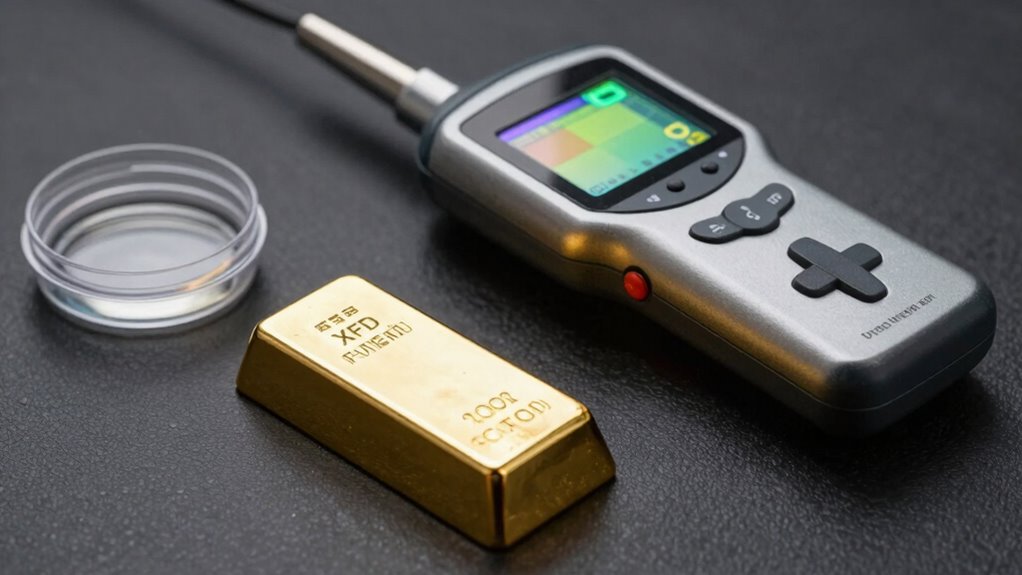
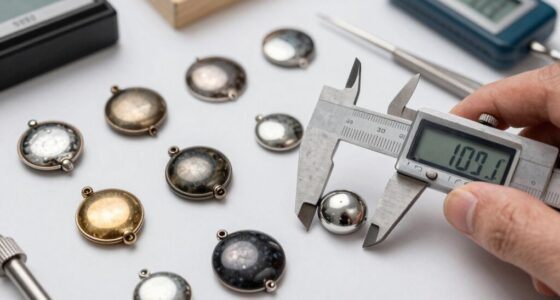
When choosing between density testing and X-ray fluorescence (XRF) analysis, it’s important to understand how each method works and what insights they can provide. Density testing is one of the oldest, most straightforward techniques, rooted in historical methods that have been used for centuries to verify material purity. It involves measuring the weight and volume of a sample to determine its density, which can then be compared to known standards for precious metals or bullion. This method is quick, cost-effective, and relies on fundamental physical principles, making it a trusted choice for initial evaluations. However, while density testing can reveal if a metal is genuine, it doesn’t provide detailed compositional data.
Density testing is a quick, cost-effective way to verify material purity but lacks detailed compositional insights.
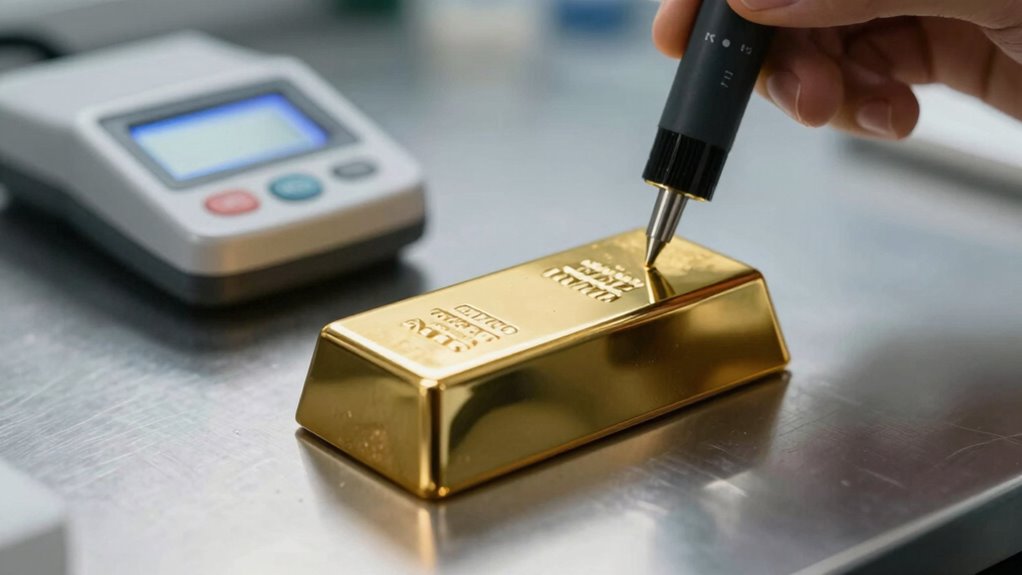
XRF analysis, on the other hand, is a more modern, highly precise technique that uses X-ray radiation to identify the elemental makeup of a sample. When XRF hits the material, it causes elements within to emit secondary X-rays at characteristic energies. By capturing these emissions, you get a detailed breakdown of the sample’s composition, including trace elements that might be missed by simpler methods. XRF has gained popularity due to its speed, portability, and high accuracy, transforming how you verify bullion authenticity and purity. This technological leap has greatly impacted the market, enabling quicker decisions and reducing the risk of counterfeit bullion entering circulation.
The market impact of these methods is notable. Historically, density testing was the primary tool for assessing precious metals, especially in small-scale or less formal settings. Its simplicity meant it was accessible but limited in scope. As XRF technology became more affordable and portable, it revolutionized the industry, allowing for rapid, on-the-spot analysis with a high degree of confidence. This shift has led to increased market transparency and trust, as buyers and sellers can now verify metals instantly and with greater accuracy. It’s also prompted refiners and assay labs to adopt XRF as a standard, pushing the industry toward more rigorous quality assurance. Understanding metal verification techniques is crucial for anyone involved in bullion trading or investment, as these methods directly influence market integrity.
For you, understanding these methods isn’t just about technical curiosity; it directly impacts the reliability of your bullion investments. Knowing the strengths and limitations of each approach helps you make smarter decisions, whether you’re verifying a purchase or evaluating the authenticity of a shipment. While traditional density tests still hold value for quick checks, the market’s shift toward XRF analysis underscores the importance of detailed, elemental insights in today’s bullion landscape. Recognizing this evolution can help you navigate the complexities of bullion verification with confidence.
As an affiliate, we earn on qualifying purchases.
Frequently Asked Questions
Can Density Testing Damage Precious Metal Items?
Density testing can potentially cause surface damage if not done carefully, but skilled technicians typically minimize this risk. The main concern is that improper testing might affect surface finish, though it usually doesn’t harm the core metal. You should prioritize testing accuracy, but also ask about the method’s impact on your precious metal’s surface. When done correctly, density testing provides reliable results without damaging your valuable items.
How Long Does an XRF Analysis Typically Take?
An XRF analysis usually takes just a few minutes, often around 2-5 minutes, showcasing its quick efficiency. While its XRF accuracy is high, keep in mind density limitations; it can’t determine purity precisely independently. This rapid testing contrasts with density testing, which takes longer but offers different insights. You benefit from XRF’s speed, but understanding its limitations ensures you get the most accurate assessment of your precious metals.
Is Density Testing Suitable for All Types of Bullion?
Density testing isn’t suitable for all bullion types because it can have testing limitations, especially with irregular shapes or coatings. While it provides good assay accuracy for homogeneous, pure metals, it might struggle with composites or layered pieces. If you rely on density testing, you should be aware of these limitations to guarantee your assessments remain accurate. Always consider combining methods for the most reliable results.
What Are the Costs Associated With Each Testing Method?
You’ll find that density testing generally costs less, often just a few hundred dollars, making it more budget-friendly for quick checks. XRF testing, however, involves higher costs—sometimes over a thousand dollars—due to sophisticated equipment. While XRF offers superior testing accuracy and detailed analysis, density testing provides a quick, affordable method. Your choice depends on whether you prioritize cost comparison or need precise results for valuable bullion.
Are There Environmental Concerns With XRF Testing?
You might think XRF testing is completely eco-friendly, but it’s not without concerns. The environmental impact mainly comes from waste disposal of small amounts of hazardous materials used in the device, like certain chemicals. While XRF minimizes waste compared to traditional methods, improper disposal of residuals can harm the environment. So, it’s wise to handle and dispose of waste carefully to protect our planet from unnecessary harm.
portable XRF analyzer for metals
As an affiliate, we earn on qualifying purchases.
As an affiliate, we earn on qualifying purchases.
Conclusion
In the world of bullion, knowing the true worth of your gold is like holding a secret map to treasure. Density testing and XRF are your trusty compass and magnifying glass, revealing hidden truths beneath shiny surfaces. Don’t let illusions fool you—trust these tools to navigate the maze of deception. With them, you’re not just buying gold; you’re securing a castle built on solid ground, where every nugget shines with genuine worth and confidence.
precious metal purity testing device
As an affiliate, we earn on qualifying purchases.
As an affiliate, we earn on qualifying purchases.
gold and silver verification tools
As an affiliate, we earn on qualifying purchases.
As an affiliate, we earn on qualifying purchases.
Fall Picks
fall essentials
As an affiliate, we earn on qualifying purchases.