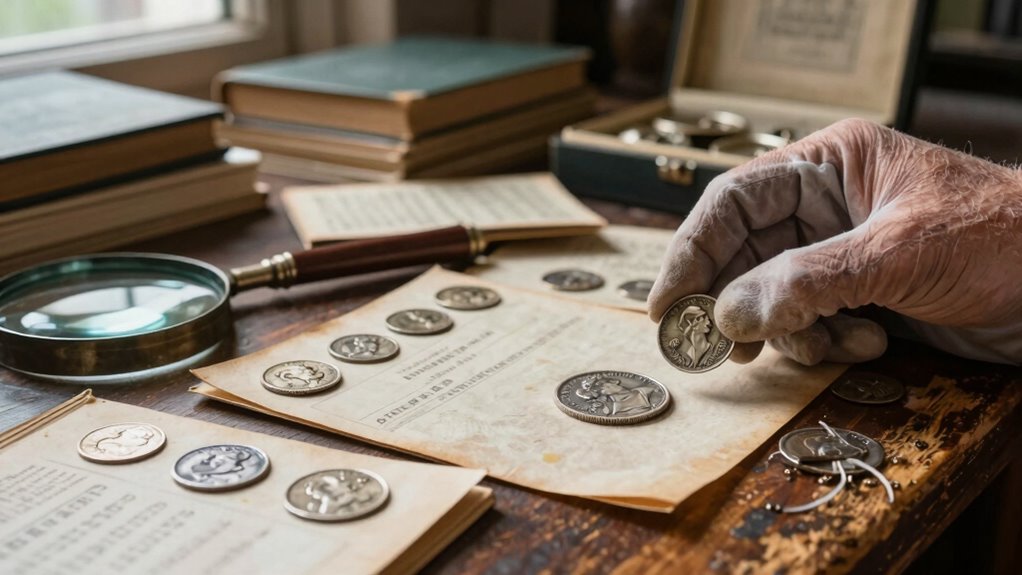

When inheriting a coin collection, start by organizing your coins carefully. Assess their condition and record key details like year, mintmark, and country. Conduct some market research to understand current values and trends. Learning about coin grading helps you evaluate quality and potential worth. Consider consulting professionals for appraisal if needed. Taking these initial steps can reveal hidden value and set a solid foundation for your retirement planning. More tips await if you keep exploring.

Get home office essentials delivered free with Prime
- Fast, free delivery on millions of items
- Prime Video, Amazon Music and more included
- Member-only deals all year
Key Takeaways
- Immediately organize and catalog inherited coins, recording details like year, mint mark, and condition.
- Learn basic coin grading to accurately assess condition and potential value.
- Research current market values and recent sale prices for similar coins.
- Seek professional appraisal for high-value or rare coins to confirm condition and worth.
- Handle coins carefully and store them properly to preserve their condition and value.
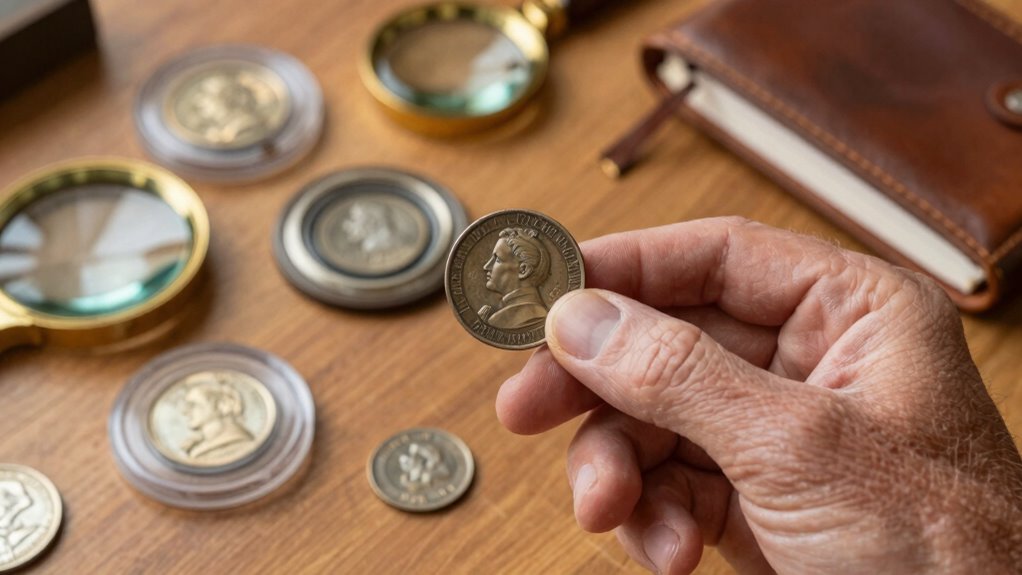
Inheriting a coin collection can be both exciting and overwhelming, especially if you’re new to numismatics. The first thing you might feel is a mix of curiosity and uncertainty about where to start. To make sense of it all, your initial step should be to familiarize yourself with coin grading. Coin grading is the process of evaluating a coin’s condition and assigning it a grade that reflects its quality and rarity. Properly evaluating the condition of each coin helps you understand its potential value and how it fits within the collection. You don’t need to become a professional grader overnight, but gaining a basic understanding will give you confidence when handling and appraising your coins.
Simultaneously, market research becomes vital. The coin market can fluctuate, and knowing current trends helps you determine which coins are more valuable today and which ones might need more attention or preservation. Research involves checking recent sales of similar coins, consulting online price guides, and reading about the types of coins in your collection. This step can prevent you from undervaluing or overestimating your collection, especially if you’re considering selling or insuring it later on. Remember, the more you understand about market trends, the better decisions you’ll make moving forward.
Once you’ve familiarized yourself with coin grading and conducted some initial market research, it’s wise to organize your collection. Lay out the coins carefully and record details like year, mint mark, country of origin, and condition. This organization makes it easier to identify which coins might be more valuable and need professional appraisal later. If you’re unsure about judging some coins, consider consulting a reputable coin dealer or getting a professional appraisal to confirm your assessments. Additionally, understanding the coin grading system can help you better interpret expert appraisals and guide your decisions. Gaining knowledge about coin values and how they fluctuate over time can also help you make more informed choices about keeping or selling parts of your collection. Developing a systematic approach to evaluating your coins will help you stay organized and ensure you don’t overlook important details. Handling your inherited coins with care and knowledge now ensures you make the most of your collection in the future, avoiding common pitfalls and maximizing its potential value.
Products Worth Considering

Dell XPS 13 13.4-Inch Touchscreen Laptop, Intel Core 5 320, 16GB RAM, 512GB SSD

Apple iMac MK472LL/A 27‑Inch Retina 5K Desktop (3.2 GHz Intel Core i5, 8 GB DDR3, 1 TB, macOS)

Apple MacBook Pro 13 with Touch Bar, 10th-Gen Quad-Core Intel Core i7 2.3GHz, 32GB RAM, 512GB SSD, Silver (Mid 2020)
As an affiliate, we earn on qualifying purchases.
Frequently Asked Questions
How Do I Identify Rare Coins in the Collection?
To identify rare coins, start by examining the coin’s condition through coin grading, which assesses wear, luster, and details. Look for coins with unique historical significance, such as limited mintages or coins from notable events. Research mintmarks and dates, and compare your coins with reputable guides or online resources. Recognizing these factors helps you spot rare coins and understand their true value in your collection.
What Are the Best Resources for Coin Valuation?
You might think you’re an expert, but for coin valuation, rely on reputable resources like professional coin grading services and authenticating techniques. Websites like PCGS and NGC offer precise coin grading and authentication, making your job easier. Books and guides from numismatic societies also help. Remember, the best resources blend expert opinions with solid authentication techniques — don’t just guess, get it right before selling or insuring your collection.
Should I Clean or Preserve the Coins as They Are?
You should prioritize preservation techniques over cleaning methods to maintain your coins’ value. Avoid harsh cleaning, which can damage surfaces and reduce worth; instead, gently handle and store coins in a dry, cool environment. If cleaning seems necessary, consult a professional. Proper preservation techniques protect your coins’ authenticity and value, ensuring they remain in the best condition for future appreciation or sale.
How Do I Determine the Collection’s Overall Value?
Ever wondered how to gauge your collection’s true worth? Start by researching each coin’s historical significance and applying grading standards to assess condition. Look for reputable price guides and consult professional appraisers to get an accurate overall value. Do you see how understanding the story behind each coin and its quality can reveal its full worth? This approach guarantees you’re accurately valuing your collection and making informed decisions.
When Is the Right Time to Sell Inherited Coins?
You should consider selling your inherited coins when market trends show peak values or stability, maximizing your return. Don’t let emotional attachment hold you back—timing is key, and holding onto coins too long might result in missed opportunities. Keep an eye on market fluctuations, and once you see favorable conditions, it’s the right time to sell. This approach guarantees you benefit financially without unnecessary hesitation.
Conclusion
Just as Odysseus charted his course homeward, approach your inherited coin collection with patience and a steady hand. Every coin holds a story, a piece of history waiting to be uncovered. Don’t rush the journey—take your time to learn, evaluate, and preserve these treasures. In doing so, you’ll turn a fleeting inheritance into a lasting legacy, much like the epic tales of old that remind us patience and care forge the greatest treasures.