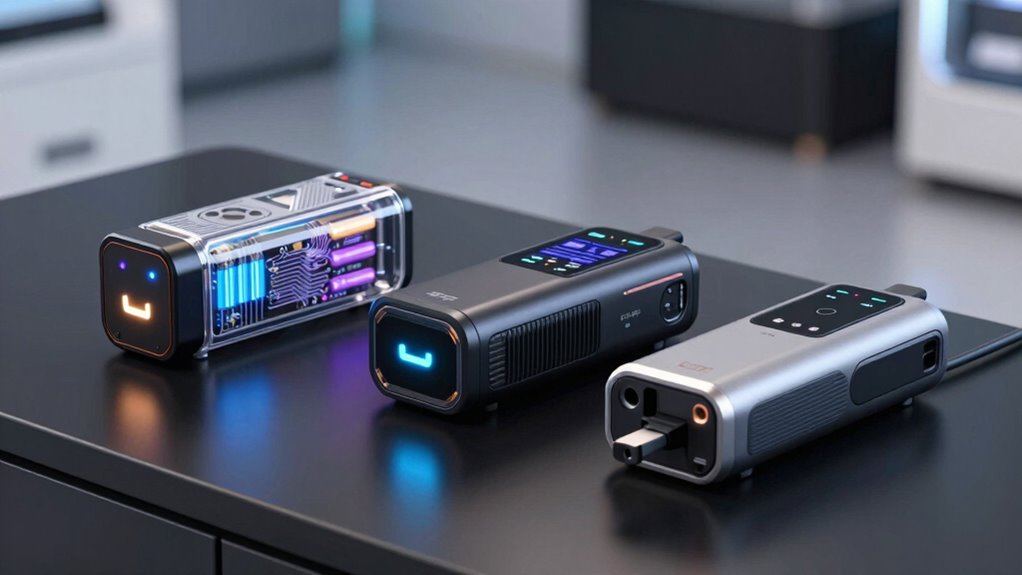

Choosing reliable portable power for sensitive medical and financial devices demands careful consideration of capacity, safety, and convenience. The Portable Power Station 300W, 192Wh stands out for its long battery life and UPS feature, ideal for uninterrupted power. The EnginStar Portable Power Station 296Wh offers a compact design with multiple charging options, suited for outdoor use. Meanwhile, the Jackery Explorer 300 combines lightweight portability with fast solar recharging. Each option balances tradeoffs between size, power, and price—making it essential to match your specific needs for emergency backup or daily use.

Get home office essentials delivered free with Prime
- Fast, free delivery on millions of items
- Prime Video, Amazon Music and more included
- Member-only deals all year
Complete the kit


Key Takeaways
- Longer-lasting batteries like LiFePO4 provide more charge cycles for dependable, repeated use.
- Size and weight vary significantly; larger batteries often offer more capacity but reduce portability.
- Fast recharge times and multiple charging options improve usability during emergencies or outdoor activities.
- Built-in safety features and UPS functions are vital for protecting sensitive medical devices.
- Price and compatibility with solar panels or car charging influence overall value and flexibility.
| Portable Power Station 300W, 600W Surge Solar Generator with 192Wh LiFePO4 Battery |  | Best Overall for Uninterrupted Power and Longevity | Rated Output: 300W | Surge Output: 600W | Battery Capacity: 192Wh | VIEW ON AMAZON | See Our Full Breakdown |
| EnginStar Portable Power Station 300W 296Wh Solar Generator |  | Best Compact and Versatile Emergency Backup | Watt-hour Capacity: 296Wh | AC Outlets: 2 | Rated Power: 300W | VIEW ON AMAZON | See Our Full Breakdown |
| 50000mAh Portable Charger Power Bank with Built-in Cables and Fast Charging |  | Best High-Capacity Power Bank with Built-In Cables | Capacity: 50,000mAh | Fast Charging: 22.5W | Ports: 4 | VIEW ON AMAZON | See Our Full Breakdown |
| Jackery Explorer 300 Portable Power Station, 292Wh |  | Best Lightweight for Portable Medical & Financial Devices | Capacity: 292Wh | Weight: 7.5 lbs | Rated Power: 300W | VIEW ON AMAZON | See Our Full Breakdown |
| Portable Charger Power Bank 50000mAh with Built-In Wall Plug and Cables, 22.5W Fast Charging |  | Best Large Capacity with Integrated Wall Recharging | Battery Capacity: 50,000mAh | Output Power: 22.5W | Ports: 4 | VIEW ON AMAZON | See Our Full Breakdown |
| portable power for important medical and financial device | Battery Type | Charge Cycles | Dimensions | Weight |
|---|---|---|---|---|
| Portable Power Station 300W | LiFePO4 | 4000+ | — | — |
| EnginStar Portable Power Stati | Lithium-ion | 1000+ | 9 x 5.5 x 7.5 inches | — |
| 50000mAh Portable Charger Powe | — | — | 4.61 x 2.87 x 1.26 inches | 0.79 lb |
| Jackery Explorer 300 Portable | LiFePO4 | 4000+ | — | 7.5 lbs |
| Portable Charger Power Bank 50 | — | — | 4.61 x 2.87 x 1.26 inches | 0.79 lb |
More Details on Our Top Picks
Portable Power Station 300W, 600W Surge Solar Generator with 192Wh LiFePO4 Battery
This power station is distinguished by its long battery life — over 4000 charge cycles — thanks to its LiFePO4 chemistry. Its built-in UPS supports critical devices like CPAP machines with a switch time of under 10ms, ensuring seamless power during outages. While its 192Wh capacity suits most medical and financial devices, it’s limited for higher-wattage appliances like hair dryers or coffee makers. The fast recharge via AC (0-80% in 1 hour) enhances convenience, but solar charging support is an extra purchase. Compared to smaller portable banks, it offers superior reliability for essential electronics but requires regular recharging if not in use.
Pros:- Fast AC recharge (0-80% in 1 hour)
- Long-lasting LiFePO4 battery with 4000+ cycles
- Supports up to 6 devices simultaneously
- Built-in UPS for critical device protection
Cons:- Limited to 192Wh, not suitable for high-power appliances
- Solar panel and car charger sold separately
- Requires frequent recharging when idle
Best for: Users needing reliable, long-term backup with frequent recharges, such as emergency preparedness or medical device operation.
Not ideal for: Those requiring high-wattage appliances or portable devices with minimal weight constraints.
- Rated Output:300W
- Surge Output:600W
- Battery Capacity:192Wh
- Battery Type:LiFePO4
- Charge Cycles:4000+
- AC Outlets:2
Our verdict“This model offers dependable power and safety features, ideal for medical and financial devices that require continuous, safe operation.”
EnginStar Portable Power Station 300W 296Wh Solar Generator
This unit balances power and portability with a modest 296Wh capacity and 300W AC output. Its compact size (9 x 5.5 x 7.5 inches) and lightweight design (6.5 lbs) make it highly portable for outdoor or travel use. It features 8 output ports including two pure sine wave AC outlets, protecting sensitive electronics like laptops and CPAPs. Its advanced BMS system ensures safe operation, while multiple charging methods—solar, AC, and car—add flexibility. However, the need for a compatible solar panel (sold separately) and limited capacity compared to larger stations mean it’s better suited for shorter-term backup or less power-intensive devices.
Pros:- Compact, lightweight design
- Multiple output options including pure sine wave AC
- Safe for sensitive devices
- Flexible charging options
Cons:- Solar panel sold separately
- Limited capacity for high-power requirements
- Not ideal for long-term power needs
Best for: Outdoor enthusiasts and emergency users who need a portable, multi-device power source with safety features.
Not ideal for: High-wattage appliances or prolonged backup requiring larger capacity.
- Watt-hour Capacity:296Wh
- AC Outlets:2
- Rated Power:300W
- Battery Type:Lithium-ion
- Charge Cycles:1000+
- Dimensions:9 x 5.5 x 7.5 inches
Our verdict“A versatile, portable station perfect for outdoor use and short-term emergencies, with safety features for sensitive electronics.”
50000mAh Portable Charger Power Bank with Built-in Cables and Fast Charging
This high-capacity 50,000mAh power bank combines convenience with speed, offering 22.5W fast charging and built-in USB-C and iOS cables. Its compact size and emergency flashlight make it a strong choice for travel and outdoor use. Still, the size can be bulky for pocket carry, and it’s limited to specific cables, so compatibility with some devices might be an issue. The price is not specified, but its large capacity and integrated cables make it a premium option for those needing reliable mobile power for critical devices.
Pros:- Massive 50,000mAh capacity
- Built-in USB-C and iOS cables
- Fast 22.5W charging
- Emergency flashlight included
Cons:- Size may be less portable for pockets
- Limited to specific built-in cables
- Recharge time around 6 hours
Best for: Travelers and professionals needing a high-capacity, all-in-one portable charger for multiple device types.
Not ideal for: Those seeking a lightweight or pocket-sized backup power solution for everyday use.
- Capacity:50,000mAh
- Fast Charging:22.5W
- Ports:4
- Dimensions:4.61 x 2.87 x 1.26 inches
- Weight:0.79 lb
- Warranty:3 years
Our verdict“A high-capacity, all-in-one portable charger ideal for travel and critical device support, with integrated cables and rapid charging.”
Jackery Explorer 300 Portable Power Station, 292Wh
The Jackery Explorer 300 is renowned for its ultra-lightweight design at just 7.5 lbs, making it highly portable for daily or emergency use. Its 292Wh capacity supports multiple devices, including laptops, drones, and CPAPs, with a 300W rated output. Its LiFePO4 battery chemistry ensures over 4,000 cycles and an estimated 11-year lifespan, making it a long-term investment. Solar charging is supported, reaching 80% in under 3 hours with a 100W panel. The main tradeoff is its slightly lower capacity compared to larger stations, which may limit use during extended outages.
Pros:- Lightweight at 7.5 lbs with a carry handle
- Long-lasting LiFePO4 battery with 4,000+ cycles
- Supports multiple devices with versatile ports
- Fast solar charging
Cons:- Solar panel sold separately
- Limited to 300W output
Best for: Users prioritizing portability and long-term reliability for medical and financial device backup.
Not ideal for: Those needing to power high-wattage appliances or requiring extended power during outages.
- Capacity:292Wh
- Weight:7.5 lbs
- Rated Power:300W
- Battery Type:LiFePO4
- Charge Cycles:4000+
- Solar Charging:80% in ~2.8 hours
Our verdict“This station offers portable, reliable power for critical devices, best suited for those who need mobility and long-term durability.”
Portable Charger Power Bank 50000mAh with Built-In Wall Plug and Cables, 22.5W Fast Charging
This power bank combines massive capacity with the convenience of an integrated foldable wall plug, allowing direct recharging without extra cables. Its 50,000mAh capacity can charge an iPhone over 10 times or a MacBook Air multiple times. The 22.5W fast charging supports quick top-ups for multiple devices, and the built-in cables reduce clutter. Its main drawback is the recharge time of around 6 hours, and its bulkier size may be less comfortable for pocket carry. Still, it offers exceptional power for prolonged emergencies or travel where outlet access is limited.
Pros:- Massive 50,000mAh capacity
- Built-in foldable wall plug
- Integrated USB-C and iOS cables
- Fast 22.5W charging
Cons:- Recharge takes about 6 hours
- Size and weight may be less pocket-friendly
Best for: Travelers and professionals needing high capacity and integrated recharging for critical mobile devices.
Not ideal for: Users seeking a compact, pocket-sized backup solution for everyday carry.
- Battery Capacity:50,000mAh
- Output Power:22.5W
- Ports:4
- Dimensions:4.61 x 2.87 x 1.26 inches
- Weight:0.79 lb
- Warranty:12 months
Our verdict“An excellent high-capacity power bank with integrated wall charging, suitable for extended travel or backup needs demanding maximum power.”
How We Picked
Our selection process focused on devices that prioritize safety, capacity, and ease of use for critical medical and financial equipment. We evaluated battery chemistry, charging options, portability, and user safety features. Each product was compared based on capacity, recharge speed, device compatibility, and additional features like UPS or built-in cables. We also considered tradeoffs such as size, cost, and whether the device supports solar charging, which is essential for off-grid reliability. The goal was to identify options that balance power, portability, and safety for sensitive devices in diverse scenarios.
| portable power for important medical and financial device | Battery Type |
|---|---|
| Portable Power Station 300W | LiFePO4 |
| EnginStar Portable Power Stati | Lithium-ion |
| 50000mAh Portable Charger Powe | — |
| Jackery Explorer 300 Portable | LiFePO4 |
| Portable Charger Power Bank 50 | — |
Factors to Consider When Choosing Portable Power For Important Medical And Financial Devices
When selecting portable power for vital medical and financial devices, key factors include capacity, safety features, charging versatility, and size. You need enough watt-hours to support your devices over the expected duration while ensuring the device’s chemistry and design protect sensitive electronics. Consider whether you need fast recharging, solar compatibility, or a built-in UPS for uninterrupted power. Portability might be less critical for stationary backup but essential for outdoor or travel scenarios. Balancing these priorities will help you choose the right model for your specific needs.
Capacity and Power Output
The capacity, measured in watt-hours (Wh), determines how long your devices can run during an outage. For most medical and financial devices, a capacity of at least 192Wh (like the Portable Power Station 300W) provides reliable backup, but larger capacities such as 296Wh or 292Wh offer more longevity. The rated power output (in watts) indicates how much load the station can handle; 300W is sufficient for most critical devices, but higher wattage is needed for appliances like hair dryers. Ensure the device supports the wattage your devices require to avoid overloads.
Battery Chemistry and Longevity
LiFePO4 batteries, used in the top models, excel in longevity with over 4000 charge cycles, making them cost-effective over time. They also offer stable, safe operation with less thermal risk. Lithium-ion batteries are common but typically have fewer charge cycles, which may mean replacing the unit sooner. For critical medical and financial devices, safety and durability are paramount, so choosing a station with proven chemistry is wise.
Portability and Size
Tradeoffs between capacity and portability are inevitable. The Jackery Explorer 300 offers excellent portability at just 7.5 lbs, suitable for frequent travel or outdoor use. Larger stations like the Portable Power Station 300W or the high-capacity power banks provide more runtime but are heavier and less convenient to carry regularly. Decide whether your priority is lightweight mobility or longer-lasting power during outages or outdoor activities.
Additional Features and Safety
Features like built-in UPS, safety protections (short circuit, overcharge), and multiple charging options can enhance device safety and usability. A UPS function ensures critical medical devices stay powered during outages without interruption. Solar compatibility adds off-grid resilience but may involve extra costs for panels. Built-in cables and fast charging support simplify setup and reduce clutter, especially important in emergency scenarios.
Price and Value
Higher capacity and advanced features usually come at increased cost. Weigh the price against your power needs, device compatibility, and future use plans. For ongoing use or frequent emergencies, investing in a high-quality LiFePO4 unit with UPS and solar support pays off. For temporary or light use, smaller, less expensive models may suffice, but beware of sacrificing safety or longevity.
Frequently Asked Questions
How long will a portable power station run my medical devices?
The runtime depends on the device’s wattage and the station’s capacity. For example, a 192Wh station can typically run a CPAP machine (around 60W) for approximately 3 hours, while a smaller device like a phone charges in less than an hour. Larger capacities like 296Wh or 292Wh extend this period, making them better suited for longer outages or multiple devices. Always check your device’s wattage to estimate runtime accurately.
Is it safe to use portable power stations for sensitive financial or medical devices?
Yes, provided the station features pure sine wave output and safety protections such as overcharge, short circuit, and thermal safeguards. Devices like the EnginStar and Jackery models include these features, making them safe for sensitive electronics. Avoid units with modified sine wave outputs, which can cause issues with medical devices. Always verify the safety certifications and features before use.
Can I recharge my portable power station with solar panels?
Many models, including the Portable Power Station 300W and EnginStar, support solar recharging via MPPT controllers, which optimize charging efficiency. However, solar panels are typically sold separately, so consider the total investment. Solar recharging is especially valuable for off-grid or emergency use, providing a renewable power source that extends device runtime without relying solely on AC power.
How often should I recharge my portable station when not in use?
It’s recommended to recharge your portable power station every 1-3 months to maintain battery health, especially for LiFePO4 units. Fully depleting the battery can reduce its lifespan, so periodic top-ups help preserve capacity. If stored for long periods, keep the device in a cool, dry place and check its charge level regularly.
What should I consider when choosing a portable power station for medical devices?
Prioritize units with pure sine wave outputs, UPS functions, and safety protections to prevent damage to sensitive equipment. Capacity should match the runtime needs of your devices, and fast recharge features are beneficial during emergencies. Weight and size matter if mobility is a concern, but safety and reliability should always come first to ensure your devices operate correctly during critical moments.
Conclusion
For users needing dependable, long-term backup power, the Portable Power Station 300W offers the most reliable performance with extensive charge cycles and safety features. Outdoor adventurers or those with moderate power needs will find the EnginStar Solar Generator a versatile choice. Meanwhile, frequent travelers or professionals seeking maximum portability and high capacity should consider the Jackery Explorer 300 or the large-capacity power banks with built-in cables. Tailor your choice to your specific device requirements, mobility needs, and budget to ensure continuous, safe operation of your critical medical and financial equipment.
Fall Picks

Samsung Essential S3 27-Inch Curved FHD Monitor
As an affiliate, we earn on qualifying purchases.