

As the global population ages, you’ll notice shifts in markets driven by increased demand for healthcare, senior-focused products, and personalized services. Labor shortages from declining working-age populations push industries toward automation and new job types. Consumer spending patterns change as older adults have more purchasing power, influencing sectors like housing, finance, and leisure. These demographic trends reshape investment opportunities and business strategies—stay with us to explore how these changes will continue to influence markets profoundly.
Key Takeaways
- Aging populations increase demand for healthcare, senior services, and age-specific products, shifting market focus toward this demographic.
- Declining birth rates lead to smaller households, influencing housing markets and household goods demand.
- Rising dependency ratios challenge economic growth, prompting automation and new job sectors in care and support industries.
- Older consumers’ increased purchasing power transforms consumer markets, favoring simplified, eco-friendly, and personalized products.
- Demographic shifts affect investment strategies, boosting healthcare stocks and retirement-related financial products while impacting overall economic growth.
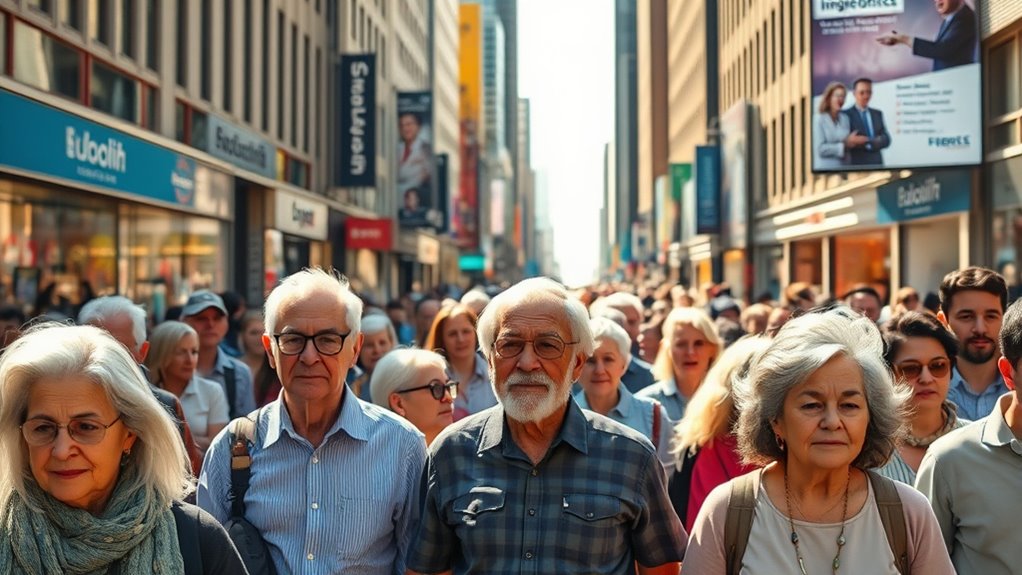
As the global population ages rapidly, demographic shifts are reshaping markets worldwide. By 2025, around 1.2 billion people will be over age 60, marking a significant increase in the aging demographic. This trend is especially evident in developed markets like the U.S., where the population is projected to grow from 350 million in 2025 to 367 million by 2055. However, this growth is accompanied by a considerable aging trend that influences market composition. Many developed countries, along with some emerging markets, face shrinking working-age populations due to declining fertility rates below replacement levels. This slowdown in growth means that overall population expansion is decelerating, with the U.S. experiencing an annual growth rate of just 0.48% between 2020 and 2025. Meanwhile, regions like Sub-Saharan Africa and certain emerging markets still enjoy youthful populations, creating contrasting demographic dividends.
These shifts have profound economic implications. As the proportion of working-age individuals declines, dependency ratios rise, which can hamper potential economic growth. You’ll notice labor shortages becoming more common, pushing industries to adopt automation and AI solutions to fill gaps. The aging trend also spurs greater demand for jobs in the care economy—nursing, social work, personal care aides, and related fields—shaping employment patterns for years to come. Conversely, some emerging markets still benefit from a youthful workforce, but even there, technological advances are redefining job requirements and skills, complicating employment prospects. Between 2025 and 2030, these structural shifts will lead to a transformation in labor markets, with some sectors experiencing net employment growth driven by the needs of older populations.
Rising dependency ratios challenge growth, driving automation and increasing demand for care sector jobs amid shifting labor markets.
Consumer markets are also changing as a result. Older adults now wield more purchasing power, creating new opportunities across healthcare, lifestyle, and financial planning sectors. You’ll see brands pivot towards products like low-impact exercise equipment and online fitness classes tailored for seniors, which have already seen revenue jumps of over 30%. Older consumers tend to prefer simplified technology, eco-friendly products, and personalized marketing that emphasizes convenience and values. Lower fertility rates mean household sizes are shrinking, which influences demand for housing and household-related goods. Additionally, their media consumption and social engagement patterns differ, prompting marketers to adjust their advertising platforms and messaging strategies to better reach aging audiences. Furthermore, demographic data from various sources underscores how these population changes are accelerating market adaptations.
Finally, these demographic changes influence financial markets and investments. Shrinking populations and altered age structures impact savings rates, investment preferences, and overall capital market dynamics. Lower growth in the labor force can reduce economic expansion and diminish returns on traditional assets, prompting investors to rethink asset allocation. Increased demand for healthcare stocks, retirement savings products, and businesses serving seniors highlights how markets are adjusting to these demographic realities. Some regions with positive population growth continue to offer robust consumption and investment opportunities, diversifying the global financial outlook. As you navigate these shifts, understanding demographic-driven structural changes and innovation in senior-focused sectors will be key to capturing growth.
Frequently Asked Questions
How Do Aging Populations Influence Technological Innovation?
Aging populations drive technological innovation by creating demand for new healthcare solutions, assistive devices, and aging-friendly technologies. You’ll find companies investing in smart health monitors, robotics, and mobility aids to cater to older adults’ needs. As the market expands, you’ll notice more startups and established firms focusing on innovations that improve quality of life for seniors. This shift encourages ongoing research and development, accelerating technological progress tailored to an aging world.
What Are the Geographic Variations in Demographic Impacts?
Imagine walking through a world where cities pulse with energy in some places, yet grow quieter in others. Geographic variations shape your experience, with regions facing aging populations expanding healthcare and retirement sectors, while younger areas innovate rapidly, fueling tech growth. You see how local birth rates, migration, and policies carve distinct demographic paths, influencing markets differently—some thriving, others adapting. This shifting landscape demands your attention, as the effects ripple across economies worldwide.
How Do Cultural Differences Shape Aging Market Strategies?
You should tailor aging market strategies to respect cultural values and social norms. In some cultures, family plays a central role in elder care, so marketing should emphasize community and family support. In others, independence is prized, so focus on products that promote self-sufficiency. Understanding these cultural nuances helps you create targeted messaging, build trust, and develop services that resonate deeply with diverse aging populations.
What Role Does Government Policy Play in Demographic-Driven Markets?
Government policies shape demographic-driven markets by setting the rules that influence aging populations. They fund healthcare, adjust retirement age, and promote inclusive programs, directly impacting consumer behavior. You’ll find that supportive policies encourage innovation in senior services and products, while restrictive ones may slow growth. It’s a balancing act, where proactive government actions can accelerate market adaptation, making aging populations more integrated and economically active.
How Might Future Demographic Shifts Alter Global Economic Power?
Future demographic shifts could shift global economic power as younger populations in emerging markets grow, increasing their influence and productivity. You may see developed nations losing economic dominance as their aging populations slow growth, while developing regions experience rapid expansion. These changes could reshape trade, investment, and innovation patterns. Your strategies should adapt to these shifts, focusing on emerging markets with youthful workforces and potential for sustained economic growth.
Conclusion
As you imagine the world’s skyline filling with silver-haired silhouettes and quiet streets echoing with stories of the past, you see how aging shapes markets. The once bustling hubs now hum with a different rhythm, where new needs blossom like resilient flowers in a changing garden. Embrace this shift, for it’s a landscape that demands innovation and compassion. In this evolving scene, your awareness becomes the guiding light steering markets toward a future of inclusion and growth.