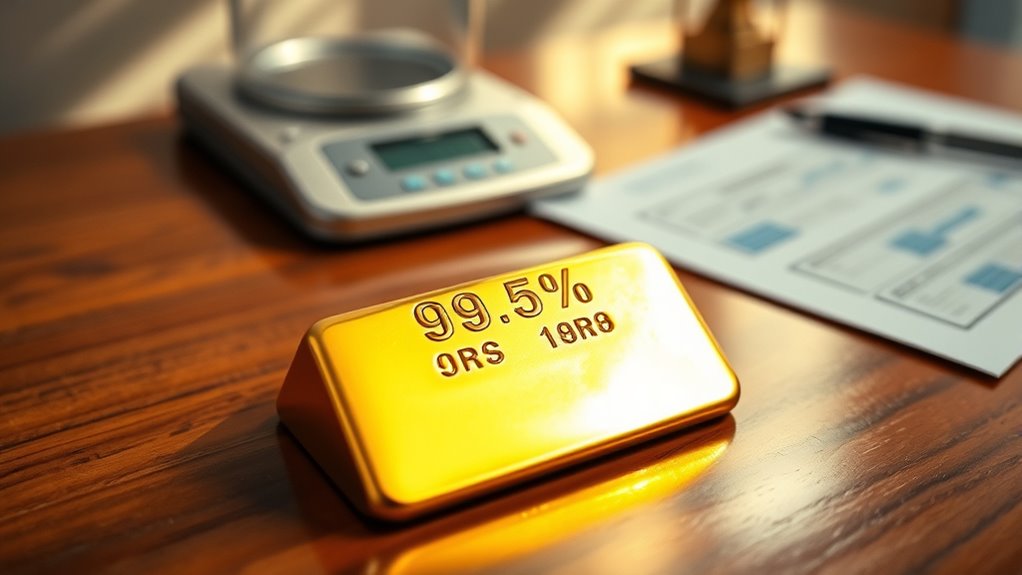

To qualify for an IRA, your gold must meet a purity standard of at least 99.5%, guaranteeing it is nearly pure and free of significant impurities. Some coins like American Gold Eagles are accepted even if slightly below this threshold, but the American Gold Buffalo requires 99.9%. Silver must be at least 99.9% pure, and platinum or palladium coins need 99.95%. Understanding these standards helps ensure your metals stay compliant, so keep exploring to learn more about maintaining IRA eligibility.
Key Takeaways
- IRA-approved gold must have a minimum purity of 99.5%, ensuring high-quality investment metals.
- Some coins like American Gold Eagles are accepted even if below 99.5%, but most require strict adherence.
- Purity standards confirm metals are free from significant impurities, complying with IRS regulations.
- Metals must be produced by IRS-approved refiners to meet purity and authenticity requirements.
- Proper storage in IRS-approved depositories is essential for maintaining IRA eligibility and security.

If you’re considering investing in a Precious Metals IRA, understanding the purity standards is essential. These standards determine which metals qualify for IRA inclusion and guarantee your investment meets legal and IRS requirements. For gold, the minimum purity is 99.5%. This means the gold must be at least 99.5% pure, with any impurities removed during refining. While some coins, like American Gold Eagles, are accepted even if they don’t strictly meet this purity threshold, they still comply with IRS rules. Other gold coins, such as the American Gold Buffalo, must have a purity of at least 99.9% to qualify.
Silver has a slightly higher purity requirement—at least 99.9%. This standard guarantees that the silver in your IRA is nearly pure, minimizing contaminants that could affect value or compliance. Silver coins like the American Silver Eagle and Canadian Silver Maple Leafs meet this standard, with the latter reaching 99.99% purity. These coins are popular options because they meet or exceed the IRS criteria, ensuring smooth inclusion in your IRA. Silver’s purity standard helps protect investors from potential issues with purity discrepancies.
Platinum and palladium require even higher purity standards—at least 99.95%. For platinum, coins like the American Platinum Eagle and Canadian Platinum Maple Leafs meet this threshold, ensuring they qualify for IRA investment. Similarly, palladium must also be at least 99.95% pure, with coins such as the Canadian Palladium Maple Leafs fitting this requirement. In addition to purity, metals must be produced by IRS-approved refiners, which guarantees quality and authenticity. These refiners adhere to strict standards, making sure the metals are accurately tested and properly processed before they enter your IRA. Verifying the refiner’s accreditation is an important step in ensuring compliance.
The storage and compliance rules reinforce the importance of purity standards. All IRA metals must be stored in IRS-approved depositories—home storage isn’t permitted. This policy safeguards your assets and guarantees regulatory compliance. When purchasing metals, you need to verify that they’re produced by approved refiners and meet the purity standards, which helps avoid any tax penalties or disqualification.
Investing in precious metals through an IRA offers diversification and potential stability, but it hinges on meeting these purity standards. Ensuring your metals qualify means selecting coins and bars that are produced by reputable refiners and have the appropriate purity levels. Whether you’re choosing gold, silver, platinum, or palladium, understanding these standards helps you make informed decisions and maintain compliance. This knowledge ultimately protects your investment while maximizing its growth potential within the IRA structure.
Frequently Asked Questions
How Does Purity Affect IRA Tax Benefits?
Pure metals meet IRS standards, guaranteeing your IRA benefits from tax advantages. When your gold or other precious metals are at least 99.5% pure, they qualify for tax-deferred growth and potential tax-free withdrawals, depending on the account type. If purity drops below this threshold, the IRS considers the metals non-compliant, which can lead to penalties, taxes, and loss of tax benefits. Keeping purity high ensures your IRA remains compliant and financially advantageous.
Can I Mix Different Purity Levels in My IRA?
Imagine stacking different colored blocks—some shiny gold, others duller. You can’t mix various purity levels in your IRA; each asset must meet specific standards, like 99.5% pure gold. Mixing purities isn’t allowed because it complicates valuation and compliance. To keep your IRA in good standing, verify all metals meet the required purity standards before adding them, maintaining the integrity and benefits of your investment.
What Are the Consequences of Non-Compliance With Purity Standards?
If you don’t adhere to purity standards, your IRA could face penalties or disqualification. The IRS may consider your metals non-qualifying, which means you can’t hold them in your IRA anymore. This could lead to tax consequences, including penalties, or having to sell the metals at a loss. To avoid this, always guarantee your precious metals meet the required purity levels and follow IRS guidelines carefully.
Are There Specific Storage Requirements for High-Purity Metals?
You need to store high-purity metals in a secure, insured, and approved depository to meet regulations. Use vaults with strict access controls, temperature and humidity controls, and regular audits. Keep detailed records of your holdings and storage conditions. This guarantees your metals stay in pristine condition, complies with legal standards, and protects your investment from theft, damage, or degradation. Proper storage is essential for maintaining purity and security.
How Often Are Purity Standards for IRA Metals Updated?
Purity standards for IRA metals are reviewed periodically, usually every few years, but updates aren’t on a strict schedule. You should stay informed through the IRS or your custodian’s notifications, as changes can occur based on industry standards or regulatory updates. Regularly checking these sources guarantees your metals meet current requirements, helping you avoid penalties or disqualification of your IRA assets.
Conclusion
Now that you know the nuances of purity standards, you can confidently choose precious metals that meet IRA requirements. Remember, the 99.5% gold rule guarantees you’re securing a solid, sincere investment. With careful consideration and clarity, you craft a collection of cherished, genuine treasures. Let your choices shine brightly, symbolizing stability and security. By understanding standards, you’re not just investing—you’re inspiring confidence and creating a lasting legacy.