For a balanced portfolio, consider allocating between 5% and 15% to gold. This range helps boost diversification, reduce volatility, and provide a hedge against economic uncertainties. If you’re nearing retirement or want added resilience, you might lean toward 10% to 15%. An even higher percentage can be beneficial during times of high inflation or market stress. Keep exploring to discover how to tailor your gold position for your goals.
Key Takeaways
- Aim for a gold allocation of about 5% to 15% of your total portfolio for balanced growth and stability.
- Consider increasing gold holdings to 10-20% during economic uncertainty or nearing retirement.
- Use a target of around 10% physical gold in a diversified portfolio for effective risk mitigation.
- Adjust your gold percentage based on market conditions, risk tolerance, and investment goals.
- Many experts recommend a strategic range of 2-15%, with higher allocations during inflationary periods.

Adding gold to your portfolio can substantially improve its risk-adjusted returns and provide crucial diversification. Many experts recommend maintaining a permanent strategic allocation of around 10% physical gold within a diversified portfolio. This percentage balances growth potential with risk mitigation, offering a sturdy hedge against economic uncertainties and market volatility. Historically, holding between 5% and 15% gold has yielded stronger risk-adjusted returns compared to traditional 60/40 stock and bond mixes. This range tends to deliver a smoother performance, reducing overall volatility while maintaining growth prospects. If you’re nearing or in retirement, some advisors suggest increasing your gold allocation to about 15% to maximize resilience during market stress, helping protect your savings from downturns.
Adding 5-15% gold enhances risk-adjusted returns and offers vital diversification for stability and growth.
Recently, Morgan Stanley’s CIO proposed a more aggressive approach, recommending a 20% gold allocation within a new 60/20/20 portfolio model, replacing bonds with gold to reflect their diminished safe-haven role. BlackRock also advocates for a tactical and strategic range of 2-4% gold for short-term diversification and long-term protection against dollar devaluation or deficits. These varying recommendations highlight how your gold allocation should align with your risk tolerance, investment horizon, and market outlook.
Gold’s long-term performance supports its role as a valuable component of your portfolio. Since 1971, gold’s annual growth has averaged about 8.10% in USD, surpassing many other asset classes. From 1999 to 2024, gold returned approximately 9.23% annually, outperforming U.S. equities, international stocks, emerging markets, and bonds during that period. Portfolios with 10-25% gold typically achieve higher Sharpe ratios over rolling 10-year periods, indicating more stable returns with less volatility. Gold acts not only as a crisis hedge but also as an engine for growth, improving the overall risk-return profile of your investments. During periods of stagflation or high inflation, allocating 30-40% to gold has boosted returns, though it can increase volatility.
Most financial advisors agree on the importance of gold, with 76% recommending clients hold it regularly and 83% suggesting allocations of at least 10%. Over half see gold as useful both tactically and strategically. When it comes to specific products, about 70% prefer gold ETFs, with over half also favoring physical bullion. High-net-worth investors particularly recognize the value of ETFs, with 84% believing they improve portfolio performance. Additionally, understanding the correlation between assets can help determine optimal allocations, especially as correlations shift over time.
As market correlations shift—especially from negative to positive between bonds and equities—the traditional diversification benefits diminish, increasing overall risk. To maintain your desired risk level, increasing your gold allocation becomes essential, as gold’s lack of correlation with stocks and bonds helps offset rising correlations. Ultimately, your ideal gold share depends on your financial goals, risk appetite, and market conditions, but a well-considered allocation can significantly bolster your portfolio’s resilience and growth potential.
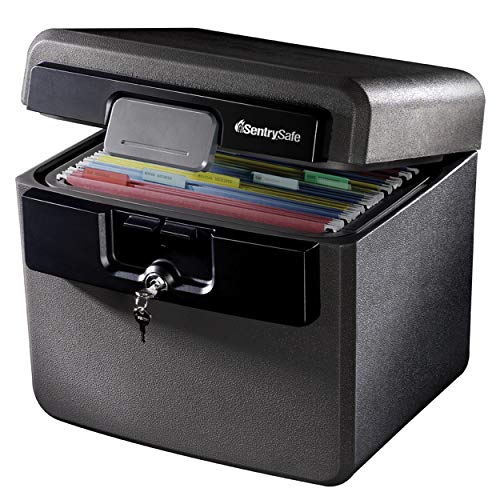
SentrySafe Black Fireproof and Waterproof Safe, File Folder and Document Box with Key Lock, Ex. 14.3 x 15.5 x 13.5 inches, HD4100
FIREPROOF: Safe is UL Classified to endure 1/2 hour at 1550°F and keep interior temperatures safe for irreplaceable...
As an affiliate, we earn on qualifying purchases.
Frequently Asked Questions
How Does Gold Perform During Economic Downturns?
During economic downturns, gold often performs well as a safe-haven asset. You’ll find that its value tends to rise when stocks decline and inflation fears increase. This makes gold a good hedge against economic instability. You should consider holding some gold in your portfolio because it can help protect your investments during tough times, offering stability when other assets are more volatile.
What Are the Tax Implications of Investing in Gold?
Think of gold as your trusty knight—valuable, but with its own tax rules. When you sell physical gold, you might owe capital gains tax if it’s held longer than a year, often at lower rates. If you trade gold ETFs, it’s taxed as a stock sale. Keep records, and consider consulting a tax pro—it’s the smart way to avoid any dragons in your financial journey.
Should I Prefer Physical Gold or Gold ETFS?
You should consider choosing gold ETFs over physical gold if you want convenience and ease of trading. ETFs are more liquid, easier to store, and often have lower costs associated with buying and selling. However, if you prefer tangible assets and want to avoid counterparty risk, physical gold might suit you better. Evaluate your investment goals, storage options, and risk tolerance to decide which aligns best with your needs.
How Often Should I Rebalance My Gold Holdings?
You should rebalance your gold holdings at least once a year or whenever your portfolio drifts more than 5% from your target allocation. Regular rebalancing helps maintain your desired risk level and guarantees gold continues to serve its purpose in your portfolio. Keep an eye on market fluctuations and your overall investment goals, adjusting your gold holdings proactively to stay aligned with your financial plan.
Is Gold a Good Hedge Against Inflation?
Think of gold as a sturdy lighthouse guiding your ship through stormy economic seas. It’s a solid hedge against inflation, maintaining its value when prices rise and currency weakens. You should consider including gold in your portfolio to protect your wealth during turbulent times. While not foolproof, gold’s historical resilience makes it a valuable safety net, helping you stay afloat when inflation threatens your financial stability.

DocSafe 5200°F Document Organizer with Lock, Upgraded Heat Insulated Fireproof&Water-Resistant Box 8 Layers File Organizer, Portable Home Travel Safe Storage for Important Documents and More
5200°F Fireproof&Water-resistant safe: The Upgraded important document organizer is made of thickened silicone coated fireproof cotton material and...
As an affiliate, we earn on qualifying purchases.
Conclusion
Ultimately, including gold in your portfolio acts like a sturdy anchor amid swirling storms, providing stability when markets shake. While some say you should hold a small percentage, imagine gold as a calm lighthouse guiding your financial ship through turbulent waters. Think of it as a resilient treasure chest, ready to preserve value when uncertainty rises. Trust your instincts, but remember—just like a lighthouse, gold’s true power lies in steady, unwavering support.

EDMUED Fireproof Document Box with Combination Lock, Fireproof Water Resistant Hard Case Safe Box for Important Documents Certificates Laptop Passports
UL-94 VTM-0 Certified Fireproof Document Box - The fireproof document box is constructed with 0.8mm premium fire-retardant, non-irritating...
As an affiliate, we earn on qualifying purchases.

PAWBOSE Fireproof Document Home Safe with Combination Lock, 16x12x5 inch Fireproof Water-Resistant Hard Case Box for Important Documents Certificates Passports Cash
UL-94 Certified Fireproof Box:PAWBOSE fireproof document box is crafted from high-quality flame-retardant silicone-coated fiberglass and passes the UL-94...
As an affiliate, we earn on qualifying purchases.