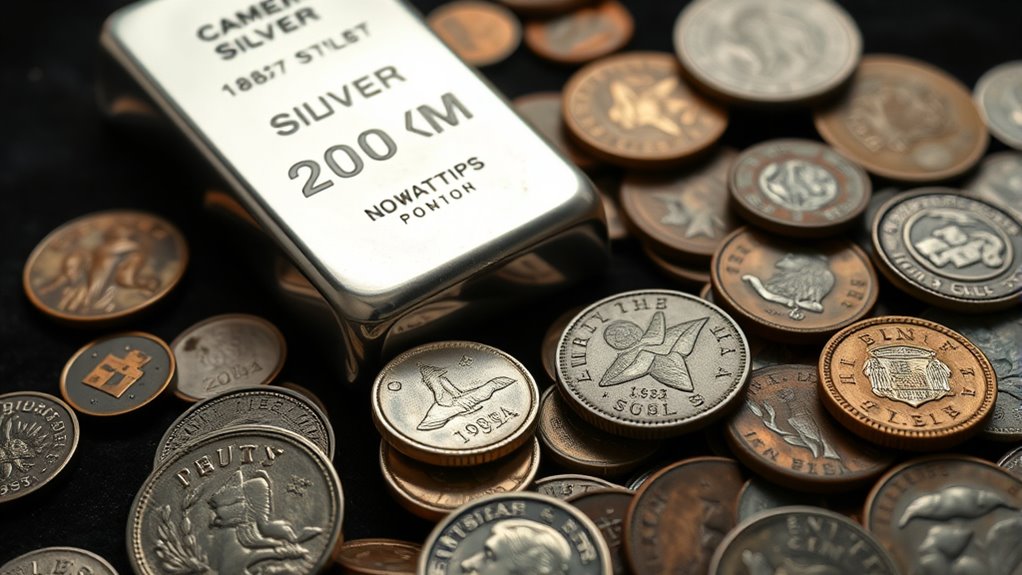

IRAs prefer bullion coins over numismatic coins because their value is straightforward, based on metal content, making them easier to assess and trade. Bullion offers greater market stability and meets IRS standards, ensuring easier regulatory compliance. In contrast, numismatic coins are rarer and can carry premiums, but their value depends on rarity and condition, making them less predictable within IRAs. Stick with bullion for simplicity and security—if you want to see why, keep exploring this topic.
Key Takeaways
- IRAs prefer bullion due to its transparent, market-driven value based on metal content.
- Bullion coins meet IRS standards more easily than numismatic coins, simplifying regulatory compliance.
- The market for bullion is more stable, predictable, and liquid, reducing investment risk within IRAs.
- Numismatic coins carry subjective valuation premiums, making them less suitable for tax-advantaged retirement accounts.
- Regulatory considerations favor bullion because of its recognized status and ease of verification for IRA inclusion.

When choosing between numismatic coins and bullion, it’s important to understand how they differ in value and purpose. While both are popular options for investing in precious metals, they serve different roles in your portfolio. Bullion coins are valued primarily by their metal content, meaning their worth is directly tied to the current market price of gold, silver, platinum, or other metals. You can easily buy and sell bullion at market rates, making it a straightforward way to hold physical assets that track the commodity’s price fluctuations. These coins are typically produced with consistent specifications, ensuring their purity and weight are standardized, which makes them easier to appraise and liquidate. Their market transparency allows investors to track their holdings easily and make informed decisions.
Bullion coins are valued mainly for their metal content and market price.
Numismatic coins, on the other hand, are valued not only for their metal content but also for their rarity, age, condition, and historical significance. These coins often have a premium over their intrinsic metal value because collectors prize them for their uniqueness and historical importance. As a result, their market value can fluctuate markedly based on collector demand, rarity, and condition. While some investors see numismatic coins as a way to diversify their holdings, their prices are less predictable and more subjective, making them less suitable for the typical IRA investment.
One key reason IRAs favor bullion over numismatic coins is simplicity. When you invest in bullion, the value is transparent and tied directly to the metal market, providing clarity and ease of valuation. IRAs are designed to be straightforward investment vehicles, and the complexity of valuing numismatic coins can introduce unnecessary risk and complications. Additionally, IRS regulations tend to favor investments that are easily verifiable and liquid within an IRA structure. Since bullion coins meet these criteria more readily than numismatic coins, they are more compatible with IRA rules.
Another factor is the potential for tax advantages. Bullion coins are generally recognized and accepted as IRS-approved precious metals for IRA holdings, making them easier to qualify and less likely to face regulatory issues. Numismatic coins, with their added premium and collector’s value, often don’t meet the strict standards required for IRA inclusion. This limits their use within retirement accounts and makes bullion the preferred choice for investors looking to maximize tax benefits and ensure compliance. Moreover, the market for bullion coins is more stable and predictable, providing peace of mind for investors planning long-term retirement strategies.
![wisedry 2 x 500 Gram [2.2 lbs] Rechargeable Silica Gel Car Dehumidifier, Microwave Fast Reactivated Desiccant Packets Large for Gun Safe Closet Basement Garage Storage Moisture Absorber Bag Reusable](https://m.media-amazon.com/images/I/51pHUtcOd3L._SL500_.jpg)
wisedry 2 x 500 Gram [2.2 lbs] Rechargeable Silica Gel Car Dehumidifier, Microwave Fast Reactivated Desiccant Packets Large for Gun Safe Closet Basement Garage Storage Moisture Absorber Bag Reusable
✅ [ CLEAR WINDOWS ] - Wisedry silica gel car dehumidifier bag reduces condensation on car windows which...
As an affiliate, we earn on qualifying purchases.
Frequently Asked Questions
Can Numismatic Coins Be Included in a Standard IRA?
No, you can’t include numismatic coins in a standard IRA. The IRS only allows certain types of precious metals, specifically bullion coins that meet purity standards and are produced by approved mints. Numismatic coins, valued for rarity and condition, don’t meet these requirements and are considered collectibles. If you want to invest in coins within an IRA, stick to approved bullion coins to guarantee compliance and avoid penalties.
What Are the Tax Implications of Investing in Numismatic Coins?
Are you aware of the tax implications when investing in numismatic coins? You could face higher capital gains taxes since these coins are often considered collectibles rather than investment assets. Unlike bullion, which benefits from more favorable tax treatment, numismatic coins may be taxed at a higher rate upon sale. This makes them less tax-efficient for retirement accounts, so it is crucial to weigh the potential gains against the tax impact.
How Does the Liquidity of Bullion Compare to Numismatic Coins?
Bullion is generally more liquid than numismatic coins because it’s widely recognized, easily traded, and has a consistent market value. When you need to sell, you can quickly find buyers for gold or silver bars and rounds at prevailing spot prices. In contrast, numismatic coins often require more effort to sell, may need expert appraisal, and usually sell at a premium, which can slow down your ability to convert assets into cash swiftly.
Are There Specific Storage Requirements for Numismatic Coins in IRAS?
Yes, there are specific storage requirements for numismatic coins in IRAs. You must store them in an IRS-approved depository or a qualified third-party custodian, not at home. The storage facility needs to be secure, insured, and adhere to strict regulations to prevent theft or damage. This guarantees your coins stay protected and compliant with IRS rules, but it also adds to the overall management complexity and costs of holding numismatic coins within an IRA.
What Factors Influence the Valuation of Numismatic Coins Versus Bullion?
Think of coin valuation like a mountain climb: many factors determine your ascent. For numismatic coins, rarity, condition, historical significance, and demand shape their value, making them unpredictable and subjective. Bullion, on the other hand, is like a steady stream, valued primarily by its metal content. You’ll find bullion’s worth more transparent and stable, which is why IRAs favor these investments over the fluctuating, collectible world of numismatic coins.

ZARPAX Gun Safe Dehumidifier Rod | Dehumidifier Rod For Enclosed Spaces, Gun Safe & Cabinets | Protect Valuables & Stop Humidity, Moisture, & Corrosion | Comes with 2 Mounting Brackets | 12''/30cm
PROTECT YOUR INVESTMENTS: Don't let moisture & condensation take a toll on your arms and valuable belongings any...
As an affiliate, we earn on qualifying purchases.
Conclusion
So, when it comes to IRA investments, sticking with bullion isn’t just smart—it’s like having a secret weapon in your financial arsenal. Ignore the shiny, flashy numismatic coins that tempt you with their glitter and stories; they’re more trouble than they’re worth. Bullion’s straightforward, ultra-liquid nature keeps your retirement dreams safe and sound, leaving you free to conquer the future without risking it all on a coin that’s more drama than dollar.

MAXSafes 2-in-1 Rechargeable Dehumidifier with Motion Sensor LED Light, Perfect For Gun Safe, Gun Cabinet and other enclosed areas, ETL Approved (White)
Innovative 2-in-1 Design Humidity Absorber: Introducing the world's first 2-in-1 Rechargeable Dehumidifier with a built-in LED Motion Sensor...
As an affiliate, we earn on qualifying purchases.

GearGuard 100g Professional Grade Rechargeable Dehumidifier - Desiccant (1-Pack) Moisture Absorbers for Storage Bins, Gun Safes, Cars, Boats, Closets, and other valuables.
✅ PROTECTS AGAINST MOISTURE DAMAGE Defend your gear from damp environments that can lead to wear, odor, or...
As an affiliate, we earn on qualifying purchases.