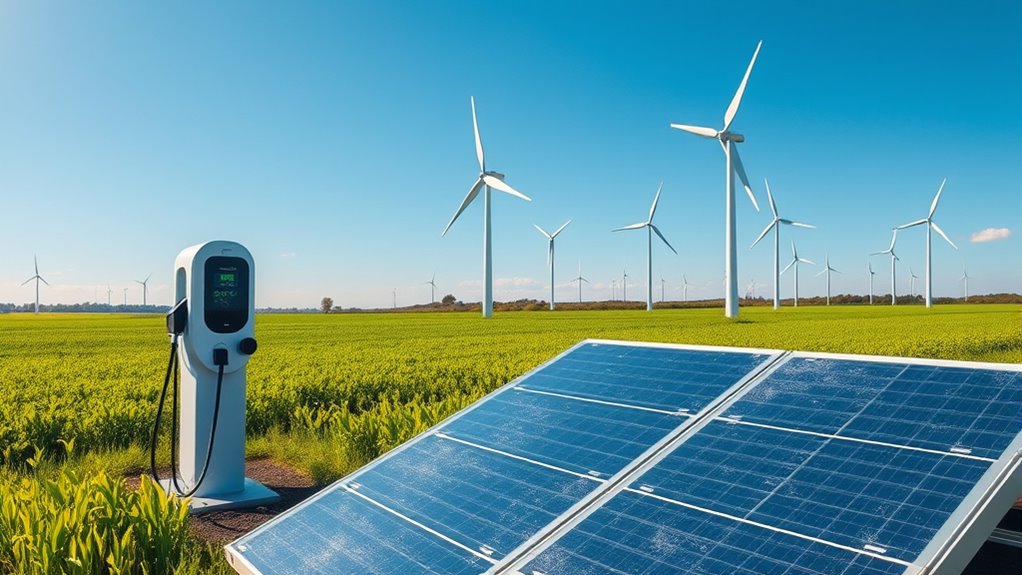

As EV adoption and renewable energy deployment accelerate, your silver demand is set to rise considerably. Silver is essential for electrical contacts, connectors, and solar panels, making it a key component in sustainable tech. Market trends show a strong link between green energy growth and increased silver use, which could boost prices and investment opportunities. Stay tuned to discover how this energy shift influences precious metals and what it means for your portfolio.
Key Takeaways
- Rising EV adoption increases demand for silver in electrical contacts and charging infrastructure.
- Global solar capacity growth correlates strongly with higher silver prices due to silver’s use in panels.
- Renewable energy expansion drives long-term demand and market integration for silver and other precious metals.
- Silver’s dual industrial and investment roles make it a key asset amid green energy-driven market shifts.
- Technological advancements and energy transition trends are likely to sustain or boost silver demand in the future.
Have you ever wondered how the global shift toward green energy impacts the market for precious metals? As the world accelerates its move toward cleaner technologies, demand for specific metals like silver and gold surges, shaping market dynamics in significant ways. Silver, in particular, plays a critical role in renewable energy applications, especially in solar panels and electric vehicle (EV) components. The increasing adoption of solar power directly boosts silver consumption because photovoltaic (PV) cells rely heavily on silver’s outstanding electrical conductivity. On average, each solar panel uses about 15–20 grams of silver, which means the demand from the solar sector alone reached around 100 million ounces in 2021, accounting for roughly 10% of global silver use. Recent data shows that global solar capacity has grown by over 20% annually in the past five years, further amplifying silver demand. This surge in solar capacity isn’t just a passing trend; statistical analyses confirm a strong short-term relationship between silver prices and renewable energy growth. Techniques like ARIMA and Vector Error Correction Models reveal that solar capacity explains a high proportion of the variance in silver and even gold prices. Both metals are influenced by the expansion of clean energy, with silver serving as an industrial input and gold often acting as a financial hedge during market volatility. As EV adoption accelerates, silver’s role becomes even more critical, because it’s used in electrical contacts, connectors, and charging infrastructure, all essential for supporting electric vehicles and the infrastructure needed to sustain their growth. Additionally, advancements in sustainable technology are expected to further increase the demand for silver, solidifying its importance in future energy systems.
Green energy growth drives silver demand, especially in solar panels and EV components, fueling market shifts and investment opportunities.
The linkages between renewable energy and precious metals aren’t simply coincidental. They are rooted in underlying market relationships that show cointegration over time, indicating that as green technologies grow, so does the demand for metals like silver and gold. This interconnectedness has implications for investors, who see silver as both an industrial metal and a safe-haven asset. Its dual role makes silver uniquely sensitive to the expansion of green energy sectors, providing a potential hedge against sector-specific risks while also offering opportunities for profit tied to renewable growth.
However, markets aren’t without risks. Demand projections for silver driven by the energy transition are subject to volatility from technological changes and substitution risks. Market conditions, geopolitical factors, and technological innovations can all influence prices unpredictably. Despite these uncertainties, the trend toward green energy continues to elevate the importance of precious metals like silver in the global economy. If the EV and solar sectors keep expanding, silver’s industrial and financial significance is likely to grow, making it a key asset for those betting on the future of clean energy.
Frequently Asked Questions
How Does Silver Compare to Other Precious Metals in EV Applications?
You’ll find silver more widely used in EV applications than other precious metals because of its excellent electrical conductivity and affordability. Unlike gold or platinum, silver’s cost-effectiveness makes it ideal for large-scale use in wiring, contacts, and batteries. While gold offers corrosion resistance, silver’s superior conductivity and lower price make it the preferred choice in most EV components, giving it a significant edge in the rapidly growing electric vehicle market.
What Are the Environmental Impacts of Increased Silver Mining?
Mining more silver can cause massive environmental damage, like deforestation, water pollution, and habitat destruction on a scale that could rival natural disasters. You might not realize it, but increased silver extraction could lead to soil erosion, loss of biodiversity, and toxic waste leaking into rivers. This boom in mining isn’t just a small footprint—it has the potential to reshape entire ecosystems and threaten wildlife and communities alike.
How Stable Is Silver Demand if EV Adoption Slows Down?
If EV adoption slows down, silver demand could become less stable, potentially decreasing as industries reduce their reliance on silver for electronics and solar panels. You might see fluctuations driven by other sectors like jewelry or traditional electronics, but overall, the market could experience volatility. Staying informed about technological shifts and alternative uses helps you understand how silver’s value might change in a slower growth scenario.
Are There Alternative Materials to Silver in Green Energy Tech?
Yes, there are alternative materials to silver in green energy tech. You might consider copper, which is cheaper and has good conductivity, or aluminum, used in some solar panels and batteries. Conductive inks and carbon-based materials are also emerging options. These alternatives can help reduce costs and dependency on silver, especially if EV adoption slows down or demand fluctuates, ensuring the sustainability of green energy technologies.
What Government Policies Could Influence Silver Prices?
Government policies can considerably influence silver prices by promoting green energy initiatives or imposing tariffs. If your government offers incentives for clean energy projects, it could increase demand for silver, driving prices higher. Conversely, stricter environmental regulations or trade restrictions might limit supply or reduce demand, causing prices to fall. Staying informed on policy changes helps you anticipate market shifts, making smarter investment decisions in silver and related assets.
Conclusion
As you consider the future of green energy, it’s clear that precious metals like silver could play a vital role. With EV demand rising, will you be ready to embrace the opportunities silver offers? The shift toward sustainable solutions is unstoppable, and silver might just be the key to powering a cleaner planet. Are you prepared to seize this chance and invest in a brighter, greener future? The choice is yours—what will you do?