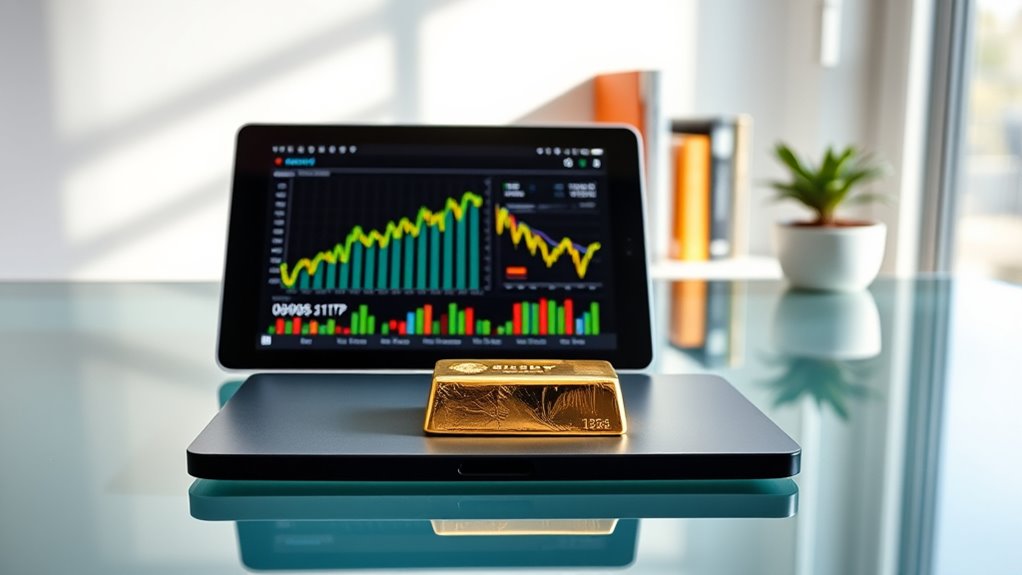

To maximize tax-free growth in your Roth IRA, consider adding alternative assets like gold and cryptocurrencies. Gold provides a tangible hedge against inflation and market volatility, while cryptocurrencies offer high growth potential and portfolio diversification. Both can be included within IRS guidelines if stored properly and managed through specialized custodians. By expanding your Roth IRA with these assets, you enhance your diversification and growth prospects—continue to discover how to do this effectively.
Key Takeaways
- Incorporate precious metals like gold in Roth IRAs by using IRS-approved depositories to ensure compliance.
- Invest in cryptocurrencies such as Bitcoin or Ethereum within Roth IRAs to diversify and leverage potential high-growth assets.
- Follow IRS rules to avoid prohibited transactions and disqualified persons when adding alternative assets to your Roth IRA.
- Use specialized custodians experienced in alternative assets to properly manage and store gold and digital currencies.
- Combining gold and crypto in a Roth IRA can maximize tax-free growth while diversifying beyond traditional investments.

Investing in a Roth IRA doesn’t have to be limited to stocks and bonds—you can diversify your retirement portfolio by including alternative assets. These are investments outside the traditional categories, offering the chance to enhance growth potential while maintaining the tax advantages of a Roth account. With a Self-Directed Roth IRA (Roth SDIRA), you gain the flexibility to hold assets like real estate, precious metals, private equity, and cryptocurrencies. This expands your options beyond conventional funds, allowing you to tailor your investments to your risk tolerance and financial goals. Keep in mind, though, IRS rules govern which assets are permissible. For example, collectibles and life insurance are prohibited, and all transactions must avoid conflicts of interest to preserve your tax benefits.
Diversify your Roth IRA by including alternative assets like real estate, precious metals, private equity, and cryptocurrencies within IRS guidelines.
Real estate, one of the most popular alternative assets, provides tangible value and steady income streams through rental payments. Whether you invest directly in residential or commercial properties, raw land, or real estate investment trusts (REITs), you can enjoy tax-free growth and withdrawals. Understanding the regulations surrounding real estate investments ensures you adhere to IRS guidelines and avoid potential penalties. Precious metals such as gold, silver, platinum, and palladium are also permitted, but they must meet specific purity standards and be stored in IRS-approved depositories. These metals can serve as a hedge against inflation and market volatility, adding stability to your retirement savings. Cryptocurrencies like Bitcoin, Ethereum, and Dogecoin are increasingly accepted in self-directed accounts, giving you exposure to digital assets that have demonstrated significant growth potential. Their inclusion can diversify your holdings further, but they come with higher risks and require careful management to stay compliant with IRS regulations.
Other alternative assets include private equity, crowdfunding investments, foreign currencies, tax liens, and loans receivable. While the IRS doesn’t provide an exhaustive list of allowed assets, it clearly prohibits certain investments, primarily those involving disqualified persons or transactions that could jeopardize your account’s tax-advantaged status. To hold these investments, you’ll need a specialized custodian experienced with alternative assets. They ensure your holdings meet IRS storage, purity, and transaction rules, so your account remains compliant and retains its tax benefits. Understanding these rules is essential for properly managing your investments and avoiding penalties.
The appeal of including alternative assets in your Roth IRA lies in their potential for higher returns, diversification, and risk mitigation. Real estate can generate tax-free passive income, precious metals act as a safeguard against inflation, and cryptocurrencies can offer explosive growth prospects. All of these benefits are amplified by the Roth’s tax-free growth and withdrawal advantages, maximizing your retirement wealth. By carefully selecting and managing your alternative assets within IRS guidelines, you can create a robust, diversified portfolio that adapts to market changes and helps secure your financial future.

7.0 Cuft Large Fireproof Safe for Home, Digital Anti-theft Safe Box with Combination Lock, Smart Alarm Systerm and Removable Shelf, Personal Safety Box for Home Documents Fireram Medicine Valuables
LARGE SAFE BOX FOR HOME: Supper large inner space for storing almost of your valuables and important document....
As an affiliate, we earn on qualifying purchases.
Frequently Asked Questions
Can I Hold Real Estate Investments in a Roth IRA?
Yes, you can hold real estate investments in a Roth IRA through a process called a self-directed IRA. You’ll need a specialized custodian to manage the account and guarantee compliance with IRS rules. Keep in mind, you can’t live in or personally benefit from the property, and all expenses must be paid from the IRA. Properly managed, real estate can be a powerful way to diversify your tax-free growth.
Are There Limits to Investing in Cryptocurrencies Within a Roth IRA?
Investing in cryptocurrencies within a Roth IRA is like sailing through a stormy sea—you can navigate safely, but risks exist. There are no strict limits on how much crypto you can hold, but the IRS requires all assets meet certain rules. You must use a qualified custodian, follow IRS regulations, and make sure your investments are properly valued. Stay informed and cautious to enjoy the tax-free growth without hitting regulatory reefs.
How Does Holding Gold Impact My Roth Ira’s Liquidity?
Holding gold in your Roth IRA can reduce liquidity because physical gold isn’t as easy to sell quickly as cash or stocks. You might face delays or need to find a specialized dealer, which can limit immediate access to funds. However, if you’re prepared for these challenges, gold offers diversification and long-term growth potential. Just remember, selling gold may involve fees and market fluctuations that could impact your ability to access cash swiftly.
Are Alternative Assets in Roth IRAS Protected From Market Volatility?
Yes, alternative assets in your Roth IRA can help protect you from market volatility because they often don’t correlate directly with traditional stocks and bonds. By diversifying with assets like gold or cryptocurrencies, you can reduce overall risk and potentially soften the impact of market swings. Keep in mind, though, that these assets can also be more volatile themselves, so it’s essential to balance your portfolio accordingly.
What Are the Tax Implications of Withdrawing Alternative Assets Early?
Jumping the gun on your investment plans can come with some tax bumps. If you withdraw alternative assets early from your Roth IRA, you might face taxes on any earnings, plus a possible 10% penalty if you’re under 59½. However, if you meet certain conditions, like a qualified distribution, you could avoid penalties. Always check with a tax pro to navigate these nuances smoothly.

JOOSEN Hotel Safe Box,1 Cubic Feet Money Pistols Document Personal Screct Mini Small Safe Mounting On Floor Desk,Digital Electric Safety Box With Keypad Override Keys
【Open Quickly with 3-6 Digit Keypad Password and 2 Steps to Reset Easily 】Enter password and open in...
As an affiliate, we earn on qualifying purchases.
Conclusion
Think of your Roth IRA as a thriving garden, where diversifying with gold and crypto is like planting rare seeds that can grow into towering, resilient trees. Just like a well-tended garden yields abundant fruit, investing in these alternatives can maximize your tax-free growth. Remember, the key is nurturing your assets wisely—because when your investments flourish, you’ll enjoy a vibrant, secure financial future, free from the weeds of tax burdens.

Bonsaii Safe, 0.6 Cubic Safe Box with Electronic Keypad, Removable Shelf, for Valuables Jewelry and Documents in Home, Hotel, or Business, 9.84" x 13.78" x 9.84" Inches, SF002
SIZE: 13.78* 9.84* 9.84 inches. (The power bank and charging cable are not included)
As an affiliate, we earn on qualifying purchases.

MLJ Large Security Safe - 8.1 Cu. Ft. Waterproof & Fireproof Home Safe with 2 Removable Shelves and Inner Cabinets for Storing Money, Medicines, Jewellery and Other Valuables (Keypad Lock)
[Large Capacity] The security safe boasts the size of 8.1cubic feet. With two removable and adjustable shelf and...
As an affiliate, we earn on qualifying purchases.