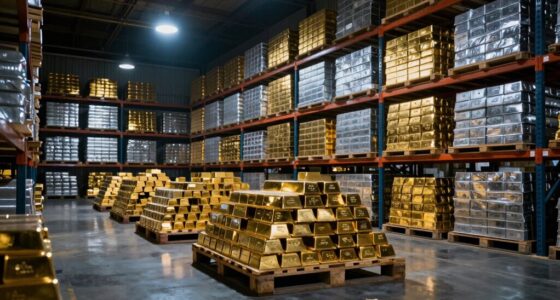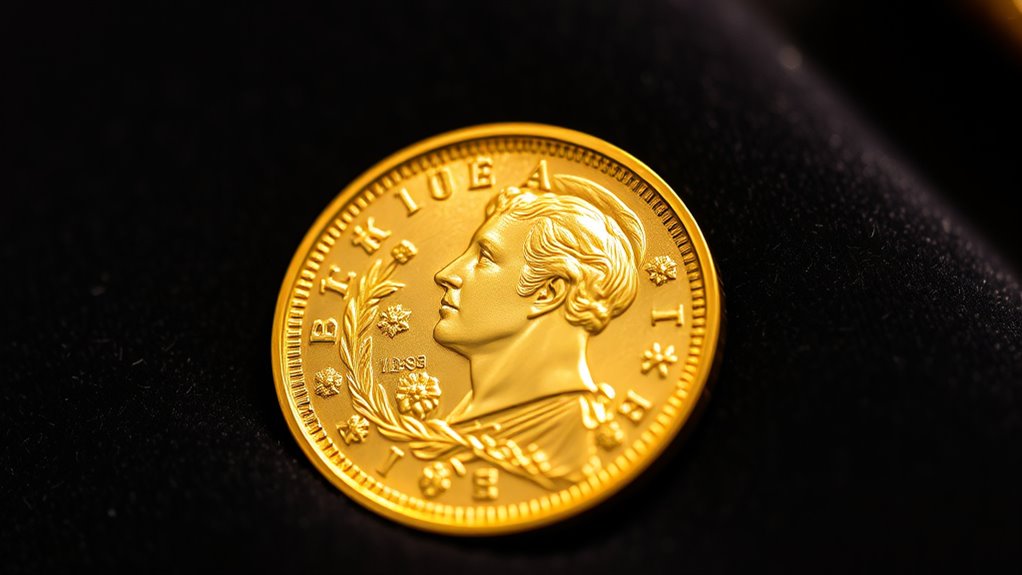

Gold coins cost more than their spot price because they include a premium reflecting craftsmanship, rarity, market demand, and mint reputation. This extra charge covers costs for designing, minting, packaging, and certification. Coins from well-known mints or limited editions tend to have higher premiums, especially when demand is strong. Because premiums fluctuate with market conditions and gold prices, understanding these factors can help you make smarter choices—there’s more to uncover about what influences coin premiums.

Get home office essentials delivered free with Prime
- Fast, free delivery on millions of items
- Prime Video, Amazon Music and more included
- Member-only deals all year
Key Takeaways
- Coin premiums include additional costs for craftsmanship, design, branding, and quality that go beyond the gold’s intrinsic value.
- Rarity, collectibility, and market demand can significantly increase premiums over the gold spot price.
- Coins from reputable mints with high-quality features tend to have higher premiums due to perceived reliability and craftsmanship.
- Market factors like economic uncertainty, demand fluctuations, and seasonal trends influence premium levels.
- Certifications, condition, and limited editions add to a coin’s value, raising its premium above the gold spot price.
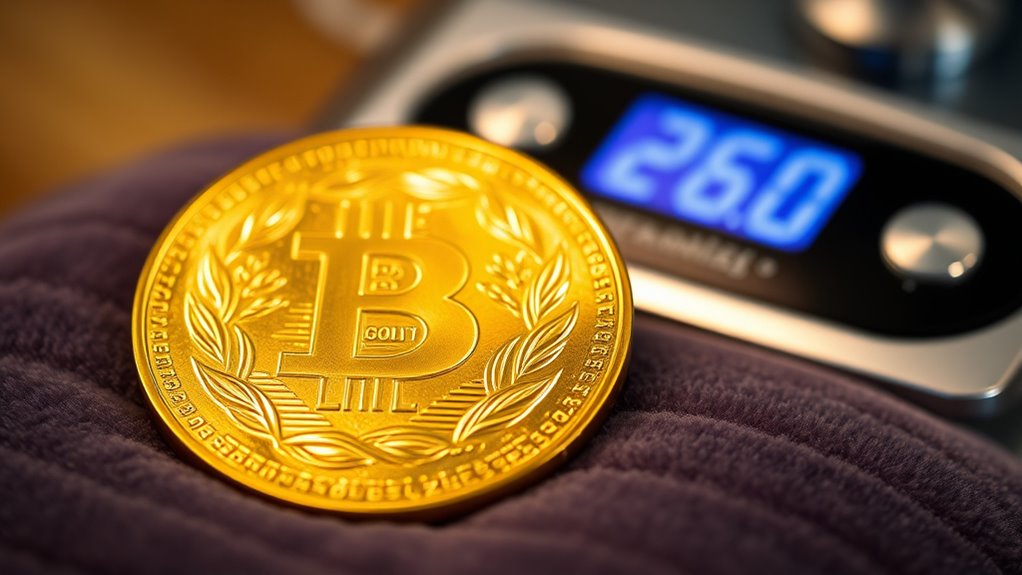
Have you ever wondered why the price of a gold coin often exceeds its intrinsic value? The answer lies in understanding coin premiums, which are the additional costs over the pure gold content. The intrinsic value of a coin is straightforward: it’s the amount of pure gold it contains multiplied by the current gold spot price. However, the actual market price typically includes more than just the gold’s worth. The coin’s premium is the difference between the market price and this intrinsic gold value, expressed as a percentage. It’s a useful way to compare coins and see how much extra you’re paying for factors beyond the gold itself.
Coin premiums are the extra costs over the pure gold content, reflecting factors beyond intrinsic value.
This premium accounts for various attributes, such as craftsmanship, design, brand reputation, and collectible appeal. For instance, coins with intricate designs or those produced by reputable mints often command higher premiums. These costs reflect the expenses involved in designing, engraving, minting, and quality control. Proof and collector-quality coins, with their detailed artistry and strict standards, tend to have even higher premiums. Advanced minting technologies, limited production runs, special packaging, certification, and grading services all add to the costs baked into the premium. Additionally, secure transport, insurance, and storage logistics are factored into the final price, making premiums dynamic and sensitive to market conditions.
Rarity and collectibility also play vital roles in influencing premiums. Coins with limited mintage or significant historical importance attract more collector demand, which drives up their premiums. Scarcity enhances a coin’s desirability, and numismatic value beyond gold content can dramatically increase premiums for certain pieces. Special editions, commemoratives, and high-condition coins graded at top levels (like Proof 70) tend to trade at premiums well above bullion coins. The condition and certification of a coin further influence its premium, as better-preserved or professionally graded coins are more attractive to collectors and investors alike.
Market supply and demand are key factors that cause premiums to fluctuate. When demand for physical gold spikes—during economic uncertainty or inflation—premiums often rise as well, especially if certain coins are scarce. Conversely, if the market demand softens or gold spot prices decline, premiums tend to contract, moving closer to the intrinsic gold value. Dealer inventory costs, competition, seasonal trends, and geopolitical events also cause short-term variations in premiums. Moreover, the technological advancements in minting and refining processes have contributed to more consistent quality, which can influence premiums positively by ensuring higher quality standards.
Lastly, the reputation of the mint or brand affects premiums markedly. Coins from renowned mints like the U.S. Mint or Royal Canadian Mint are generally more expensive because of their trustworthiness and consistent quality. Well-established brands can command higher premiums due to market recognition and perceived reliability. Lesser-known mints may offer lower premiums but often carry higher risks or variability. Since premiums are added over the fluctuating spot price, they tend to change as the gold price moves, sometimes appearing higher in percentage terms when the spot price rises.
Frequently Asked Questions
How Do Coin Premiums Vary Across Different Gold Coin Types?
You’ll find coin premiums vary depending on the gold coin type. For example, popular coins like American Gold Eagles and Canadian Maple Leafs usually have lower premiums due to high demand and liquidity. In contrast, rare or collectible coins, such as proof or numismatic varieties, often carry higher premiums because of their uniqueness and limited supply. Your choice depends on whether you prioritize affordability or potential value appreciation.
What Factors Influence Fluctuations in Coin Premiums Over Time?
You see coin premiums fluctuate due to supply and demand shifts, market sentiment, and economic stability. When demand spikes or supplies tighten, premiums rise. Conversely, during stable periods or high gold spot prices, premiums often decrease. Factors like coin rarity, condition, and collector interest also influence premiums over time. Staying aware of these elements helps you anticipate changes and make smarter buying or selling decisions in the gold market.
Are Coin Premiums Higher for Collectible or Bullion Coins?
Back in the day, coin premiums tend to be higher for collectible coins. You’ll find that numismatic value and rarity boost premiums more than bullion coins, which mainly reflect the gold spot price. Collectible coins often have unique designs, historical significance, or limited mintage, making them more desirable. So, if you’re after value, expect to pay a premium for collectible coins compared to straightforward bullion options.
How Can Investors Minimize the Impact of Premiums on Their Purchases?
To minimize premiums, shop around and compare prices from different dealers to find the best deal. Buy in larger quantities when possible, as premiums often decrease per coin with bulk purchases. Consider purchasing generic or less popular coins, which usually have lower premiums. Stay informed about market trends and avoid buying during high demand or market volatility. Building relationships with reputable dealers can also help you access fairer prices over time.
Do Premiums Differ Between Domestic and International Gold Coin Markets?
Did you know premiums are typically 1-5% higher internationally? Yes, premiums do differ between domestic and international markets. You might find lower premiums domestically due to higher demand and established distribution channels. International markets can have higher premiums because of shipping costs, taxes, and limited availability. So, when buying gold coins, consider where you purchase from, as choosing a domestic dealer can often save you money on premiums.
Conclusion
Now you see, coin premiums are the glittering price tag on your gold treasure chest. They’re like a small island of extra cost in a vast sea of spot prices, shaped by demand, rarity, and craftsmanship. Knowing this helps you navigate the gold market’s dance floor with confidence, avoiding surprises. So, when you buy that shiny coin, remember it’s more than metal — it’s a treasure with a story, wrapped in a little extra sparkle just for you.
Halloween Picks
halloween
As an affiliate, we earn on qualifying purchases.