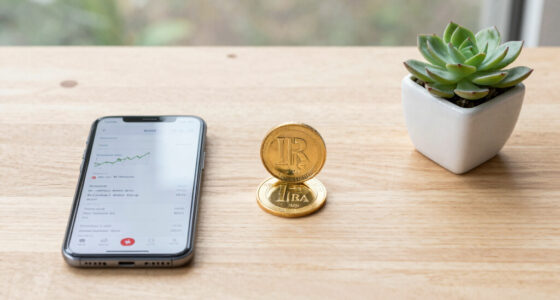
Using dollar-cost averaging for your gold and crypto investments means consistently investing a fixed amount at regular intervals, no matter how the markets move. This approach helps you avoid poor market timing and reduces the risk of buying high. Over time, it smooths out short-term volatility and can lower your average purchase price, especially during dips. Stick with it, and you’ll better manage market swings—exploring more about how this strategy can benefit you is just a step away.
Key Takeaways
- DCA involves investing a fixed amount regularly, reducing the risk of market timing and emotional trading.
- It smooths out short-term volatility by averaging purchase costs over time in both gold and cryptocurrencies.
- DCA allows you to buy more during dips and less during peaks, optimizing long-term gains in volatile markets.
- Regular investments foster discipline and help build wealth gradually, even amid market fluctuations.
- Empirical evidence shows DCA can lower overall purchase prices and enhance resilience against market shocks.

Dollar-cost averaging (DCA) is a proven strategy that helps you invest steadily in gold and cryptocurrencies, even when markets are volatile. Instead of trying to time the market perfectly, you commit to investing a fixed sum at regular intervals, regardless of asset prices. This approach reduces the risk of buying high and missing out on future rebounds. With gold and crypto prices fluctuating frequently, DCA allows you to average out your purchase costs over time, smoothing out short-term volatility. It encourages discipline, helping you build your investment gradually without succumbing to emotional trading decisions. While lump-sum investing might outperform during steady market rises, it also exposes you to higher short-term risk. DCA offers a safer, more manageable way to grow your holdings, especially if your capital is limited or if you’re cautious about market timing.
When you apply DCA to gold investments, you benefit from lower risk associated with price swings. As prices dip, your fixed investments buy more gold ounces, decreasing your average cost per ounce. Conversely, when prices rise, you purchase fewer ounces, preventing overexposure at highs. This method promotes diversification, as you steadily accumulate small amounts of gold over years, reducing dependency on a single entry point. Gold’s reputation as a safe-haven asset means that, despite short-term fluctuations, it tends to trend upward over the long term. DCA helps you capitalize on this resilience, especially when macroeconomic uncertainties, like inflation or geopolitical tensions, threaten your wealth. Empirical data shows that DCA can substantially lower your average purchase price compared to market peaks, enhancing your long-term returns. This strategy also helps mitigate the impact of unpredictable market shocks, making your investments more resilient. Additionally, gold’s historical trend of long-term growth makes it a reliable component of a diversified portfolio.
Cryptocurrencies, known for their high volatility, are well-suited for DCA. Their rapid price swings can trigger anxiety or impulsive decisions, but regular investments help you avoid trying to pick the perfect entry point. By investing consistently, you accumulate more crypto assets over time, gradually increasing your exposure without the stress of sudden market moves. Many platforms now offer automatic recurring buys, making DCA easy to implement. This systematic approach buffers you against sharp declines and unpredictable spikes, which are common in crypto markets. Over time, DCA enables you to buy more units when prices are low and fewer when they’re high, smoothing out your overall cost basis. This disciplined method aligns with market volatility trends, helping you stay committed to your investment plan despite fluctuations.
Market volatility impacts DCA outcomes in both gold and crypto. During bear markets, you buy more units at lower prices, positioning yourself for potential gains when markets recover. In rising markets, DCA might lead to a higher average purchase cost than lump-sum investing, but it minimizes risk by avoiding overcommitment at peaks. Short-term price spikes can distort results, but long-term averaging tends to reduce these effects. Volatility driven by geopolitical events, economic data, or technological changes in crypto only makes DCA more attractive. Considering recent trends, gold prices have surged over 60%, with new highs exceeding $4,300 per ounce, illustrating the long-term upside potential of steady investing. Overall, DCA provides a disciplined, resilient approach to building wealth in both gold and cryptocurrencies, helping you navigate market ups and downs with confidence.
As an affiliate, we earn on qualifying purchases.
Frequently Asked Questions
How Does Dollar-Cost Averaging Compare to Lump-Sum Investing?
Dollar-cost averaging reduces your risk by spreading out investments over time, so you buy more when prices are low and less when they’re high. In contrast, lump-sum investing puts all your money in at once, which can maximize gains if the market rises quickly but also exposes you to higher risk if prices drop suddenly. Your choice depends on your risk tolerance and market outlook.
What Are the Tax Implications of Dollar-Cost Averaging?
When you use dollar-cost averaging, you generally face the same tax implications as regular investing. You’ll owe taxes on any gains when you sell your assets, based on the difference between your purchase price and sale price. Since you’re buying at different times, your cost basis may be complicated to track. Keep detailed records, and consider consulting a tax professional to understand specific rules and minimize your tax liability.
Can Dollar-Cost Averaging Minimize Investment Risks Effectively?
Yes, dollar-cost averaging can effectively minimize your investment risks by spreading out purchases over time. This strategy reduces the impact of market volatility, ensuring you don’t buy at peaks. You maintain consistent investment habits, which helps avoid emotional decisions and potential losses during downturns. Over time, this disciplined approach can lead to more stable growth, especially in unpredictable markets like gold and cryptocurrencies.
How Often Should I Execute Dollar-Cost Averaging Purchases?
You should execute dollar-cost averaging purchases monthly or quarterly. For example, if you invest $200 every month in gold or crypto, you reduce the risk of buying at a peak. This consistent approach spreads your investment over time, smoothing out price fluctuations. By sticking to a regular schedule, you’ll avoid emotional decisions and build wealth steadily, regardless of short-term market volatility.
Is Dollar-Cost Averaging Suitable for All Types of Cryptocurrencies?
Dollar-cost averaging can work with many cryptocurrencies, but it’s not suitable for all. You benefit when you invest regularly in coins with strong fundamentals and good liquidity. However, highly volatile or less established tokens might not be ideal, as their prices can swing wildly. Make sure to research each cryptocurrency’s stability and long-term potential before applying dollar-cost averaging, so you minimize risks and maximize potential gains.
cryptocurrency investment platform
As an affiliate, we earn on qualifying purchases.
As an affiliate, we earn on qualifying purchases.
Conclusion
By consistently investing through dollar-cost averaging, you’re planting seeds in a garden that blooms over time, smoothing out volatility’s wild weeds. It’s a steady hand guiding you through gold and crypto’s unpredictable terrain, turning market fluctuations into opportunities rather than setbacks. Remember, patience isn’t just a virtue—it’s your best ally in this journey. Keep your eye on the horizon, and let time be your most trusted compass in building lasting wealth.
automatic recurring crypto investment
As an affiliate, we earn on qualifying purchases.
As an affiliate, we earn on qualifying purchases.

SHOP WGS Gold Bar 14K Yellow Gold Bullion Gold Bars for Collectible & Value Storage Gifts for Him & Her (12 Gram)
- Authentic Solid Gold: Made from real 10K, 14K, or 18K gold
- High-Polish Finish: Expertly crafted with a luxurious shine
- Clear Karat & Weight Markings: Stamped for authenticity and details
As an affiliate, we earn on qualifying purchases.
As an affiliate, we earn on qualifying purchases.