
Storing precious metals securely requires selecting the right safe, installing it properly, and following best security practices. This guide is for individuals who own or plan to own valuable metals like gold, silver, or platinum and want to protect them from theft, damage, or loss. The process involves choosing an appropriate safe, preparing the installation site, and securing the safe effectively. Follow these clear steps to ensure your assets are protected and accessible only to you.

Get home office essentials delivered free with Prime
- Fast, free delivery on millions of items
- Prime Video, Amazon Music and more included
- Member-only deals all year

KYODOLED Fireproof Document Box with Key Lock, Large Safe Storage for Valuables, Fire Resistant Security Chest, Lock Box for Pass…
- ✔ Dimensions: 13.2” x 11” x 4.13”
- ✔ Material: Steel
- ✔ Color: Black

Dalmbox Fire Resistant Document Lock Box Safe with Key, Black
- ✔ Interior Dimensions: 11.8” x 9.65” x 4.53”
- ✔ Weight: 7 lbs
- ✔ Material: Durable metal
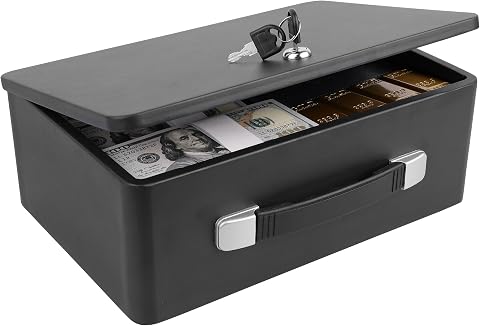
Fireproof Document Box with Key Lock, Portable Metal Safe with Carrying Handle, 12.7 x 8.7 x 4.6 Inches
- ✔ Size: 12.7 x 8.7 x 4.6 inches
- ✔ Interior Dimensions: 12.5 x 8.5 x 4.5 inches
- ✔ Material: Cold-rolled steel
Difficulty: Intermediate | Time: 2-3 hours
What You’ll Need
Tools & Materials:
- Power drill and appropriate drill bits
- Screwdriver set
- Level
- Measuring tape
- Anchor bolts or security mounting hardware
- Hammer (if needed)
Knowledge:
- Basic understanding of home security principles
- Ability to use common hand tools
- Familiarity with measuring and positioning
Ensure the installation area is stable, concrete or solid flooring is preferred, and check local regulations for safe installation practices. Have someone assist if the safe is heavy or bulky.
KYODOLED Fireproof Document Box with Key Lock, Large Safe Storage for Valuables, Fire Resistant Security Chest, Lock Box for Pass…
The KYODOLED Fireproof Document Box stands out for its combination of large capacity and fire-resistant insulation, making it a top choice for storing precious metals alongside documents and jewelry. Its durable steel construction offers reliable protection against fire, while the key lock adds a layer of security. Compared with smaller or less robust options, this safe can accommodate larger stacks of metals or multiple valuables, though it is heavier and less portable. Its black finish and straightforward design make it a practical, no-nonsense choice for home or office use.
Pros:
- Durable steel construction with fire-resistant insulation
- Large capacity suitable for multiple items
- Portability with a handle for easy transport
Cons:
- Heavy when fully loaded
- Limited color options and aesthetic appeal
Best for: Those seeking a large, fireproof safe to store precious metals and multiple valuables at home or in an office.
Not ideal for: Users needing a lightweight, discreet, or portable safe for frequent travel or outdoor use.
Bottom line: A versatile, fire-resistant safe ideal for home or office storage of precious metals and valuables, with a tradeoff in weight.
“A versatile, fire-resistant safe ideal for home or office storage of precious metals and valuables, with a tradeoff in weight.”
Dalmbox Fire Resistant Document Lock Box Safe with Key, Black
The Dalmbox Fire Resistant Lock Box offers a practical balance between size and security, making it suitable for those who need a portable safe for valuables including precious metals. Its sturdy construction and scratch-resistant finish ensure durability, and the handle makes it easy to carry. However, it lacks detailed fireproof certifications and advanced security features, which may be a concern for high-value or long-term storage. This safe is better suited for temporary or travel use rather than as a primary secure storage for large quantities of metals.
Pros:
- Large capacity for various valuables
- Sturdy, scratch-resistant construction
- Lightweight and portable with handle
Cons:
- Limited security features beyond basic key lock
- No explicit fireproof certification
Best for: Individuals needing a portable, durable safe for travel or short-term storage of valuables.
Not ideal for: Users seeking high-security or fireproof certification for long-term or high-value storage.
Bottom line: A solid portable option for on-the-go storage, but not ideal for high-security or fireproof needs.
“A solid portable option for on-the-go storage, but not ideal for high-security or fireproof needs.”
Fireproof Document Box with Key Lock, Portable Metal Safe with Carrying Handle, 12.7 x 8.7 x 4.6 Inches
This fireproof portable metal safe combines sturdy steel construction with high-grade fire-resistant insulation, making it well-suited for safeguarding precious metals, documents, and cash. Its compact size and carrying handle enhance portability, while the key lock provides reliable security. Compared to larger safes, it offers a good balance of fire protection and ease of transport, but its limited fire resistance details and absence of digital or combination locks mean it’s best for basic security rather than high-security needs. Its capacity fits standard documents and small stacks of metals, making it ideal for personal use.
Pros:
- Reliable fire and theft protection
- Large capacity for documents and small valuables
- Portable with carrying handle
Cons:
- Limited fire resistance details provided
- No digital or combination lock options
Best for: Homeowners or travelers needing a secure, fireproof safe for smaller quantities of valuables or metals.
Not ideal for: Users requiring extensive capacity or advanced electronic security features.
Bottom line: A practical, fire-resistant safe for personal use, balancing protection with portability, but not for extensive storage needs.
“A practical, fire-resistant safe for personal use, balancing protection with portability, but not for extensive storage needs.”
As an Amazon Associate we earn from qualifying purchases.
Before You Start
Verify the weight and security features of your chosen safe to match the value of your precious metals. Clear the installation site of obstacles and ensure good lighting. Confirm that the location is discreet yet accessible for regular access. Be aware of local regulations regarding anchoring safes, especially in shared or rented properties.
Step-by-Step Instructions
Step 1: Select an appropriate safe
Choose a safe rated for storing valuable items, with features like fire resistance, tamper-proof locking mechanisms, and sturdy construction. Ensure its size fits your collection and space constraints.
Tip:Opt for safes with electronic or biometric locks for added security, but ensure you understand the locking mechanism and have access codes or data stored securely.
Check: The safe fits your collection, feels sturdy, and has secure, reliable locking features.
Step 2: Identify the installation location
Select a discreet, stable spot on a concrete or solid floor, away from common access points. Use a level to confirm the surface is flat and suitable for mounting.
Tip:A basement, behind a concealed panel, or inside a closet on a concrete slab are good options. Avoid placing the safe where it can be easily seen or tampered with.
Check: The chosen spot is stable, level, and offers concealment or minimal visibility.
Step 3: Measure and mark mounting points
Place the safe at the intended spot, then mark the positions of the mounting holes through the safe’s pre-drilled holes or on its sides. Use a measuring tape to ensure accuracy.
Tip:Double-check measurements before drilling to avoid misalignment. Mark both the floor and the safe’s mounting points.
Check: Marks are precise, aligned, and correspond to the safe’s mounting holes.
Step 4: Drill holes for mounting
Use a power drill with an appropriate masonry or concrete bit to drill holes at the marked points. Wear safety goggles and gloves during drilling.
Tip:If the safe is to be anchored into drywall or wood, select suitable drill bits and anchors accordingly.
Check: Holes are clean, properly drilled, and match the size of your anchors or bolts.
Step 5: Insert anchors and secure the safe
Insert heavy-duty anchors into the drilled holes if mounting into concrete or brick, then align the safe’s mounting holes with the anchors. Use a screwdriver or wrench to tighten the anchor bolts securely.
Tip:Ensure bolts are tight but avoid over-tightening, which can damage the safe or mounting surface.
Check: The safe is firmly attached, with no wobbling or movement when tested by gentle pressure.
Step 6: Verify security and concealment
Check that the safe is tightly mounted, difficult to remove without tools, and hidden from casual view. Test the lock to confirm it functions properly.
Tip:Consider additional security measures, such as anchoring the safe to a wall or installing it behind a false panel or furniture.
Check: The safe is stable, lock functions correctly, and it remains concealed or discreetly placed.
Common Mistakes to Avoid
- Not anchoring the safe properly to the floor or wall. — Always use appropriate anchors and tighten bolts securely to prevent removal or tipping.
- Choosing a location that is not stable or easily accessible. — Select a solid, level surface and keep the safe in a discreet, low-traffic area.
- Overlooking security features or relying solely on the lock. — Use safes with strong construction, multiple lock types, and secure mounting to enhance protection.
Troubleshooting
Problem: Safe does not fit the designated space or mounting holes don’t align.
Solution: Re-measure carefully, adjust placement, or consider a different safe with compatible dimensions.
Problem: Drill holes crack or are too large for anchors.
Solution: Use the correct drill bit size, insert appropriate anchors, and avoid over-drilling.
Problem: Safe wobbles after mounting.
Solution: Check all bolts and anchors for tightness; add additional anchors if necessary.
Problem: Lock does not operate smoothly.
Solution: Inspect for debris or misalignment; contact manufacturer if persistent issues occur.
What Success Looks Like
The safe is firmly mounted, secure, and functions properly. It holds your precious metals without wobbling or movement, and access is controlled only by authorized persons. The setup should be discreet and resistant to tampering.
Next Steps
Regularly inspect the mounting and lock functionality. Keep the safe’s keys or access codes secure. Consider installing additional security measures such as surveillance cameras or alarm systems. Periodically review your storage setup to accommodate any changes in your collection or security needs.
Frequently Asked Questions
How do I choose the right size safe for my collection?
Estimate the volume of your current precious metals and leave space for future acquisitions. Select a safe with dimensions that comfortably fit your assets while maintaining manageable weight and installation options.
Can I install a safe in a rented property?
Yes, but check your lease agreement and local laws. Use non-permanent mounting solutions like heavy-duty adhesive or floor mats if drilling is not permitted. For permanent installation, seek landlord approval.
What type of lock is best for a safe?
Electronic or biometric locks offer convenience and security. Mechanical locks are reliable but less quick to access. Choose based on your security needs and familiarity with the lock type.
How often should I inspect and maintain my safe?
Inspect the mounting, locks, and interior quarterly. Clean the lock mechanism and test access. Replace batteries for electronic locks as needed to ensure continuous operation.