
Cyber fraud risks threaten your financial security and peace of mind in retirement, making it essential to include digital safety on your checklist. Scammers target retirees by mimicking official messages, sending phishing links, or trying to access personal info. Staying vigilant with strong passwords, verifying messages, and monitoring accounts can help protect you. If you want to learn more about safeguarding your retirement, continue exploring how to stay one step ahead of cybercriminals.
Key Takeaways
- Retirees are prime targets for cybercriminals due to high online activity and valuable personal information.
- Cyber fraud risks include phishing, scams, and account hijacking, which can lead to financial loss or identity theft.
- Including cybersecurity measures in retirement planning helps protect assets and personal data from evolving threats.
- Regular vigilance, such as reviewing accounts and verifying communications, reduces the likelihood of falling victim to scams.
- Staying informed about cyber threats ensures retirees can recognize and respond effectively to potential frauds.
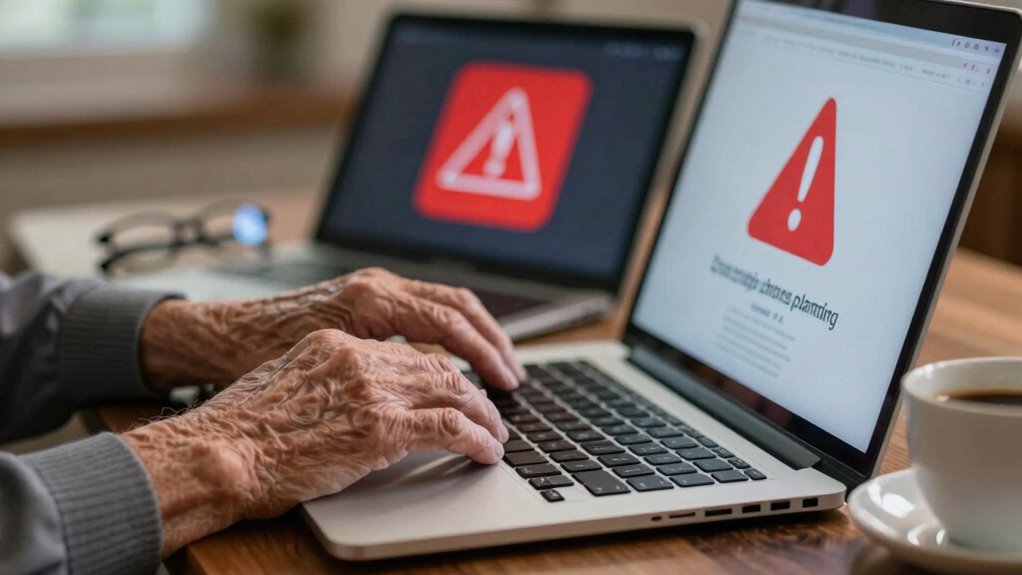
Have you ever wondered why retirees are increasingly targeted by cybercriminals? It’s because they often have a valuable Digital Identity that scammers want to exploit. Your digital identity includes personal information like your name, address, Social Security number, and banking details—everything cybercriminals need to access your accounts or commit fraud. As a retiree, you might not realize how much of your life is stored online, making it easier for hackers to gather information and impersonate you. This makes protecting your digital identity more critical than ever, especially since scammers are becoming more sophisticated in their tactics.
Retirees’ valuable digital identities attract scammers using increasingly sophisticated tactics.
One of the most common threats retirees face is falling victim to phishing scams. These scams usually come in the form of emails, fake phone calls, or messages that appear to be from legitimate sources like your bank, government agencies, or even trusted companies. Scammers craft these messages carefully, mimicking official communication styles to trick you into revealing sensitive details or clicking malicious links. Once you do, they can hijack your accounts, steal your money, or gather enough personal data to commit further fraud. As a retiree, you might be more trusting of such messages, especially if they seem urgent or threaten to suspend your benefits, making you more susceptible to these scams.
To guard against this, you need to stay vigilant. Always scrutinize the sender’s email address and look for signs of phishing, such as misspellings or unusual requests. Never click on links or download attachments from unknown sources. Instead, verify the message by contacting the organization directly using a trusted phone number or website. It’s also wise to regularly review your financial statements and online accounts for any suspicious activity. Setting up two-factor authentication adds an extra layer of security, making it harder for scammers to access your accounts even if they obtain your login details. Additionally, understanding the different types of cyber threats can help you better recognize and avoid potential scams. Staying informed about cybersecurity best practices can further empower you to protect your online presence.
You should also take steps to protect your digital identity proactively. Use strong, unique passwords for your online accounts and avoid sharing personal information on social media, which scammers often scrape for data. Keep your devices and software updated to patch security vulnerabilities. Consider enrolling in identity theft protection services that monitor your credit reports and alert you to any suspicious activity. It’s important to stay informed about common cyber scams to recognize their evolving tactics and prevent falling victim. Exploring cybersecurity awareness can help you develop the skills needed to stay one step ahead of cybercriminals. Additionally, exploring halal cultural practices and their significance can help you stay connected with your heritage while being mindful of online safety. The key is to stay informed about common scams and be cautious with your online interactions.
In today’s digital age, safeguarding your digital identity isn’t just important—it’s essential. Recognizing the threat of phishing scams and taking proactive steps to protect yourself should definitely be part of your retirement checklist. The more aware you are, the better you can defend yourself against cybercriminals aiming to steal your hard-earned savings and personal information.
retirement cybersecurity protection kit
As an affiliate, we earn on qualifying purchases.
As an affiliate, we earn on qualifying purchases.
Frequently Asked Questions
How Can Retirees Identify Phishing Emails Effectively?
You can identify phishing emails by verifying the sender’s email address carefully, looking for inconsistencies or suspicious domains. Check for phishing indicators such as urgent language, misspellings, or unexpected attachments. Always perform email verification before clicking links or sharing personal info. If something seems off, trust your instincts and double-check with the sender through a different communication method. Being cautious helps you avoid falling victim to scams.
What Are Common Signs of Cyber Fraud Targeting Seniors?
Like a wolf in sheep’s clothing, cyber fraud targeting seniors often shows signs like urgent requests for personal info, strange emails, or unfamiliar contacts. Watch out for scams that prompt you to share passwords or bank details. These financial scams can lead to identity theft, so stay cautious. Trust your instincts—if something feels off, verify before acting. Staying alert helps protect your money and identity from fraudsters.
Are There Specific Cybersecurity Tools Recommended for Retirees?
You should consider using cybersecurity tools like password managers and two-factor authentication. Password managers securely store your passwords, making it easier to create strong, unique ones for each account. Two-factor authentication adds an extra layer of security by requiring a second verification step. Together, these tools help protect your personal information from cyber fraud, giving you peace of mind as you enjoy your retirement.
How Often Should Retirees Update Their Online Security Settings?
You should update your online security settings at least every three to six months. Regular password updates help protect your accounts from unauthorized access, so consider changing passwords periodically. Practice secure browsing by avoiding suspicious links and using HTTPS websites. Staying proactive with these habits keeps your personal information safe from cyber fraud risks, giving you peace of mind as you enjoy your retirement.
What Steps Should Victims Take After a Cyber Fraud Incident?
After a cyber fraud incident, you should act quickly by reporting the crime to your bank and authorities to protect your finances and start the financial recovery process. Change all affected passwords and monitor your accounts closely. Seek emotional support from friends, family, or professionals to cope with stress. Taking these steps helps you regain control, minimizes damage, and provides reassurance during recovery.

Thetis Pro FIDO2 Security Key, Two Factor Authentication NFC Security Key FIDO 2.0, Dual USB A Ports & Type C for Multi layered Protection (HOTP) in Windows/MacOS/Linux, Gmail, Facebook,Dropbox,Github
- FIDO2 Compatibility Check: Verify compatibility before purchase
- NFC Support: NFC works with mobile authentication only
- Universal Port Compatibility: Works with USB-A and USB-C ports
As an affiliate, we earn on qualifying purchases.
As an affiliate, we earn on qualifying purchases.
Conclusion
Staying vigilant against cyber fraud is like guarding your retirement treasure chest. By keeping your information secure and staying informed, you’ll prevent scammers from slipping through your defenses. Think of your retirement savings as a delicate garden—you must tend to it daily to keep it flourishing. Don’t let cyber threats turn your peaceful retirement into a battlefield. Stay alert, stay safe, and enjoy your golden years with confidence and peace of mind.
phishing scam detection software
As an affiliate, we earn on qualifying purchases.
As an affiliate, we earn on qualifying purchases.
identity theft protection for seniors
As an affiliate, we earn on qualifying purchases.
As an affiliate, we earn on qualifying purchases.