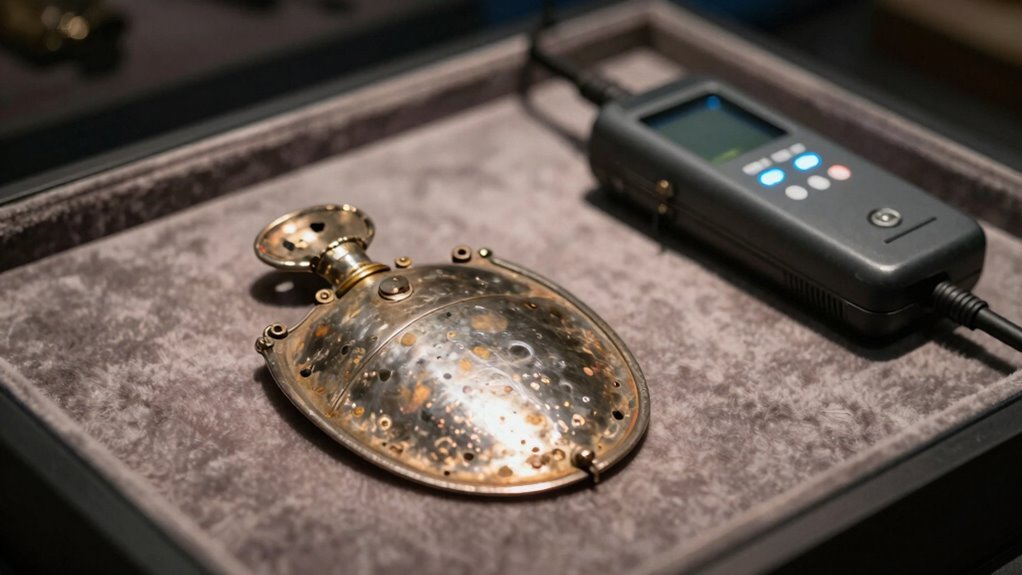

XRF testing quickly identifies major surface elements, helping with initial authentication and screening collectibles. However, it can’t reveal the true composition beneath coatings, layered structures, or historical context. Contamination, coatings, and surface heterogeneity may mislead you into false conclusions. Relying solely on XRF might result in costly mistakes, as it provides only surface data, not the full story. Want to see what’s missed and how to avoid it? Keep exploring to uncover more.
Key Takeaways
- XRF accurately identifies major surface elements but cannot determine detailed alloy compositions or manufacturing techniques.
- Surface coatings and contamination can obscure true material composition, leading to misleading results.
- XRF provides a surface snapshot, but deeper layers or internal structures remain unknown without additional methods.
- Results may be misinterpreted due to sample heterogeneity or layered structures, risking false authenticity assessments.
- Confirmatory analysis using other techniques is essential to avoid costly mistakes and ensure reliable artifact evaluation.
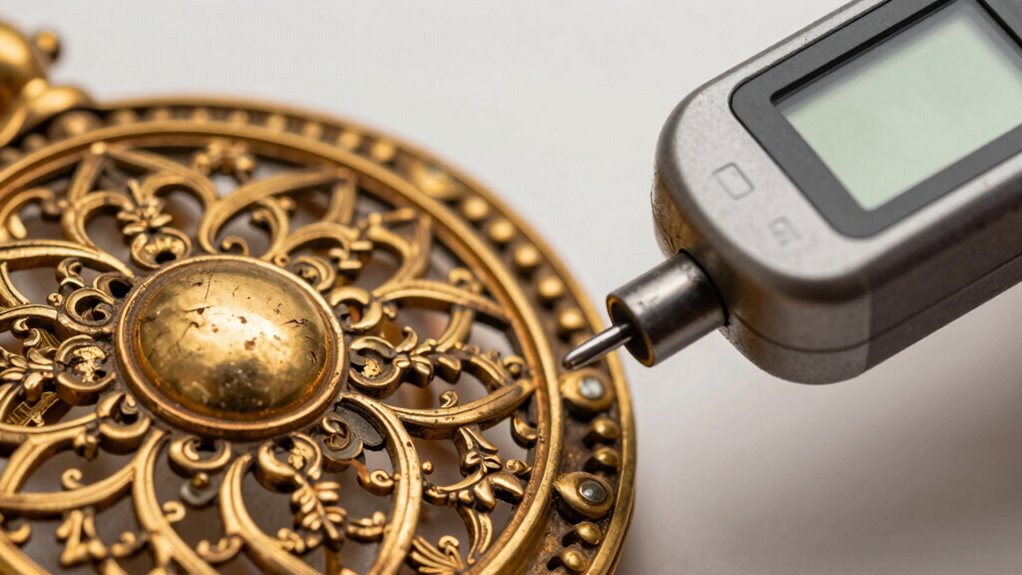
Have you ever wondered how accurate XRF testing can be when determining material composition? X-ray fluorescence (XRF) is a powerful tool that’s widely used today, but its capabilities go beyond simple analysis. When it comes to evaluating artifacts or vintage items, you might assume XRF offers complete certainty, but that’s not always the case. Understanding its limitations is vital, especially if you’re a collector or dealer who relies on these results to authenticate or appraise items.
Historically, XRF technology has evolved considerably, and its accuracy has improved markedly over time. In the past, early models struggled with precision, especially when distinguishing between elements present in trace amounts or when analyzing complex alloys. However, modern applications benefit from advanced detectors and software that enhance accuracy and speed. Today, XRF can identify the major elements within a sample with impressive reliability, making it invaluable for quick, non-destructive testing. Still, it’s important to recognize that this technology isn’t infallible. Variations in sample surface, uneven coatings, or contamination can lead to misinterpretation of the data. For example, a coated or layered artifact might show only the surface composition, which could be misleading if the underlying material differs.
Modern XRF offers reliable elemental identification, but surface coatings and contamination can still lead to misinterpretation.
In terms of what XRF can tell you, it’s excellent for identifying the elemental makeup of a sample, helping you determine if a piece is genuine or forged, or if it’s made from the materials claimed. It’s especially useful for screening large collections or conducting preliminary assessments. But, its scope is limited when it comes to understanding the full context—like the specific alloy recipes, historical manufacturing techniques, or whether certain elements were intentionally or unintentionally added over time. While it offers a snapshot of the material’s composition, it cannot reveal the full story behind an object’s provenance or age. Additionally, the surface analysis limitations of XRF mean that it can sometimes give a skewed perspective, especially with layered or coated objects. Recognizing these limitations is crucial for making informed decisions based on the results.
Furthermore, sample heterogeneity can affect the accuracy of XRF analysis, making it essential to interpret results cautiously. Many collectors discover too late that relying solely on XRF results can be problematic. A false sense of certainty might lead you to authenticate an item based on surface analysis, only to find later that deeper analysis or more sophisticated methods reveal a different story. XRF is excellent for quick insights, but it’s not a substitute for detailed testing, especially in cases where historical accuracy or provenance is critical. To truly understand what XRF can and cannot tell you, you must view its results as part of a broader investigative process—one that considers its strengths, limitations, and the importance of corroborating evidence. Being aware of these technological limitations can help prevent costly mistakes and ensure a more accurate assessment of your collection. Moreover, understanding the material composition of artifacts requires awareness of how layered structures or surface treatments can influence results. Sometimes, advanced techniques like spectroscopic analysis are necessary for a comprehensive understanding.
XRF testing kit for collectibles
As an affiliate, we earn on qualifying purchases.
As an affiliate, we earn on qualifying purchases.
Frequently Asked Questions
Can XRF Testing Identify Synthetic Materials Accurately?
Yes, XRF testing can identify synthetic materials accurately, especially when it comes to synthetic identification. It helps you differentiate between natural and synthetic substances by analyzing elemental composition. However, keep in mind that XRF is limited in distinguishing complex or layered materials. For precise material differentiation, especially with intricate synthetics, combining XRF with other analytical methods provides a clearer, more thorough understanding of the materials you’re examining.
How Does Surface Contamination Affect XRF Results?
Surface contamination can skew XRF results considerably, with studies showing residues impacting readings in up to 30% of cases. Surface residues and contamination effects hinder accurate analysis, potentially leading you to misidentify materials or overlook valuable details. To guarantee precise results, you need to clean surfaces thoroughly before testing, as even tiny traces of contamination can distort the data and affect your overall assessment.
Is XRF Testing Destructive or Non-Destructive?
XRF testing is non-destructive, meaning it doesn’t damage your artifact, which is essential in historical contexts. However, material limitations matter; some samples, especially heavily coated or contaminated ones, can affect accuracy. You can perform multiple tests without harm, but surface contamination or corrosion might skew results. So, while it’s a safe method, understanding these limitations helps you interpret findings correctly and preserves your valuable collection.
Can XRF Determine the Age of an Artifact?
Imagine trying to date a shadow—XRF testing can’t determine an artifact’s age directly, but it reveals its material composition, aiding in historical accuracy. While it’s excellent for analyzing elemental makeup, material limitations prevent it from pinpointing exact ages. You get a snapshot of what the artifact is made of, but you miss the timeline. So, XRF helps verify authenticity, yet it doesn’t replace traditional dating methods for precise age estimation.
What Are the Costs Associated With XRF Testing?
The costs associated with XRF testing vary depending on the complexity and scope, with basic tests starting around $50 to $100 per sample. Cost considerations include equipment fees, lab charges, and potential repeat tests for accuracy. While XRF offers reliable testing accuracy for elemental analysis, it’s essential to weigh these costs against the value of accurate identification, especially when evaluating the authenticity or composition of artifacts.
non-destructive metal analyzer
As an affiliate, we earn on qualifying purchases.
As an affiliate, we earn on qualifying purchases.
Conclusion
So, while XRF testing can reveal a lot about your collection’s composition, it’s not the whole story. It might tell you what’s inside, but not what’s truly valuable or authentic. That’s the quiet problem many collectors face—discovering the limits too late. Will you rely solely on these tests, or will you dig deeper? Remember, sometimes the most important mysteries lie just beneath the surface, waiting to be uncovered—and they might change everything you thought you knew.
portable XRF spectrometer for artifacts
As an affiliate, we earn on qualifying purchases.
As an affiliate, we earn on qualifying purchases.
metal coating remover
As an affiliate, we earn on qualifying purchases.
As an affiliate, we earn on qualifying purchases.